With the UAE HH Sheikh Maktoum Bin Mohammed Bin Rashid Al Maktoum announcing that it will introduce AI into schools – this confirms that we are officially in an era defined by rapid technological advancement and complex global challenges, – the landscape of education is undergoing a profound transformation.
Preparing our students for an uncertain future demands more than traditional rote learning; it requires fostering critical thinking, adaptability, creativity, and a deep sense of global citizenship.
Educators and chools worldwide are seeking innovative approaches that not only impart knowledge but also cultivate the skills and perspectives necessary to navigate and shape this evolving world.
At the forefront of this educational revolution is the work of Elpidoforos Anastasiou, a visionary leader whose pioneering initiatives seamlessly integrate cutting-edge technology, sustainability principles, and space exploration into dynamic learning frameworks.
His extensive portfolio, developed over 17+ years, showcases a commitment to transforming learning environments through research driven methodologies and hands-on experiences.
Parallel to these individual innovations runs the globally recognised framework of the International Baccalaureate (IB) program. Established in 1968, the IB has built a reputation for its rigorous academic standards and its holistic educational philosophy.
Aiming to develop inquiring, knowledgeable, and caring young people, the IB emphasises intercultural understanding, critical thinking, and engagement with global issues. Its programmes – the Primary Years Programme (PYP), Middle Years Programme (MYP), Diploma Programme (DP), and Career-related Programme (CP) – are implemented in thousands of schools across the globe, all striving to cultivate well rounded individuals prepared for the complexities of the 21st century.
It aims to explore how these innovative initiatives, ranging from school-based space centers and AI-driven sustainability projects to unique pedagogical frameworks like FITTES (Future Innovation Through Technology, Engineering & Space), can be practically and effectively integrated across the different IB programmes.
Anastasiou’s projects offer rich, authentic learning experiences that align deeply with the IB’s mission, providing invaluable tools and real-world contexts for developing the key skills and attributes enshrined in the IB Learner Profile and the Approaches to Teaching and Learning (ATL) skills framework.
By examining these integration opportunities, we can illuminate pathways for IB educators to further enhance student engagement, foster future-ready competencies, and truly embody the IB’s goal of creating a better and more peaceful world through education.
Overview of Elpidoforos Anastasiou’s Innovative Educational Projects
Elpidoforos Anastasiou’s work is driven by a clear vision: to revolutionize global education by integrating technology, entrepreneurship, and research-driven methodologies into learning.
His approach moves beyond theoretical concepts, focusing instead on creating tangible, experiential learning environments that empower students to become critical thinkers and innovators prepared for future technological frontiers. Central to his initiatives is the FITTES Framework (Future Innovation Through Technology, Engineering & Space), a comprehensive model for educational transformation that emphasises conceptualisation, implementation, collaboration, and research-based evaluation.
This framework underpins a diverse portfolio of groundbreaking projects, several of which exemplify his innovative approach:
Pioneering Space Education: Anastasiou established the world’s first school based Space Centre at PASCAL English School, complete with a fully motorized 7- metre ground station for tracking satellites.
This, along with the development of a Stratospheric Pico-satellite Platform capable of reaching near-space altitudes (95,000 feet), provides students with unparalleled, hands-on experience in satellite communications, aerospace engineering, atmospheric data collection, and real time data analysis.
Further amplifying this is ASTRO 1, the world’s largest educational space robot, which functions as a mobile ground station and interactive learning platform, bringing complex space technology directly to students across Cyprus.
Integrating Artificial Intelligence: Recognising the transformative potential of AI,
Anastasiou has spearheaded multiple initiatives. The AI-thena STEAM Coordinator is an AI platform designed to assist educators in seamlessly incorporating advanced technologies like 3D printing, robotics, and IoT into their lesson plans, ensuring equitable access to high-tech learning.
Complementing this is AIstein Junior, the world’s first multilingual AI chatbot co-created with teachers and students for educational settings, leveraging tools like ChatGPT and Raspberry Pi to enhance learning and teach students about AI itself.
Addressing Sustainability through Technology:
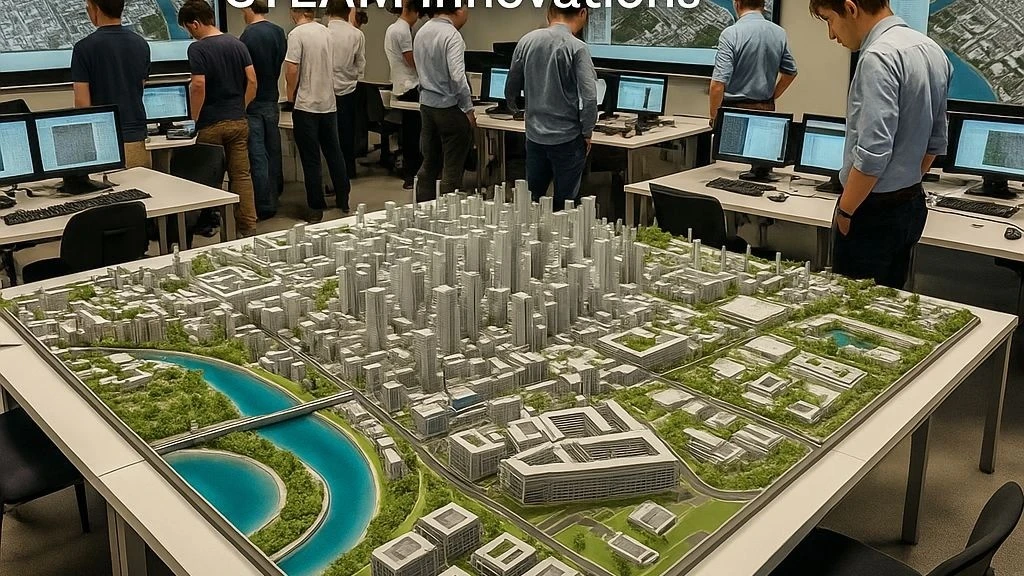
The AI Sustainable Cities Project represents a powerful fusion of environmental education, AI, satellite imaging (using NASA/ESA data), and urban planning.
Students engage in analysing real world environmental patterns, applying machine learning, and utilising 3D modelling software to design eco-friendly smart city solutions.
Similarly, the Plants to Space initiative bridges biology and space science, using smart gardens, sensors, and AI analysis to monitor plant growth under various conditions, connecting terrestrial biology to potential applications in space habitation while fostering ecological awareness.
Fostering Collaboration and Engagement:
Initiatives like Cyprus Space Week, reaching over 20,000 students, transform science education into a celebration of curiosity through interactive exhibits and hands-on challenges.
Extending this collaborative spirit internationally, Anastasiou facilitated the Global Space Education Network, establishing nine cutting-edge Space Centres across Europe. This network fosters the sharing of resources, methodologies, and collaborative projects, scaling educational innovation across diverse cultural contexts.
Across these diverse projects, several key themes emerge consistently: a commitment to hands-on, experiential learning; a focus on inquiry-based approaches where students actively investigate and solve problems; the seamless integration of cutting edge technologies (AI, space tech, robotics, IoT); an emphasis on addressing real-world problems, particularly concerning sustainability and future challenges; and a fundamentally interdisciplinary nature, breaking down traditional subject silos to reflect the interconnectedness of modern knowledge and innovation.
The International Baccalaureate (IB) Framework: Core Principles
The International Baccalaureate (IB) offers a continuum of international education designed to develop well-rounded individuals who can respond to today’s challenges with optimism and an open mind. Its reputation is built on a unique educational philosophy that emphasises not just academic achievement but also personal, emotional, and social growth. Central to the IB mission is the aim to foster intercultural understanding and respect, creating learners who are motivated to contribute positively to a more peaceful and sustainable world.
This philosophy is embodied in the IB Learner Profile, a set of ten attributes that IB programmes strive to cultivate in students. These attributes – Inquirers, Knowledgeable, Thinkers, Communicators, Principled, Open-minded, Caring, Risk-takers, Balanced, and Reflective – represent a broad range of human capacities and responsibilities that go beyond intellectual development, aiming to shape individuals who are prepared for both local and global citizenship.
Underpinning the delivery of the curriculum are the Approaches to Teaching and Learning (ATL) skills. These are deliberately taught and developed across all IB programmes, focusing on five key categories: Thinking skills (critical thinking, creativity, reflection), Communication skills (written, oral, non-verbal), Social skills (collaboration),
Self-management skills (organisation, affective skills, reflection), and Research skills (information literacy, media literacy). Developing these transferable skills is considered essential for preparing students for effective participation in a rapidly changing world and for lifelong learning.
While the specific implementation varies across the four programmes (PYP, MYP, DP, CP), certain key components are particularly relevant when considering integration with innovative projects:
Primary Years Programme (PYP): Focuses on transdisciplinary learning through Units of Inquiry, culminating in the collaborative PYP Exhibition where students explore a real-life issue. Action, initiated by the student as a result of the learning process, is a core element.
Middle Years Programme (MYP): Emphasizes conceptual understanding and learning within Global Contexts (e.g., Identities and Relationships, Scientific and Technical Innovation). It encourages Interdisciplinary Units, requires students to complete a Personal Project based on their interests, and integrates Service as Action into the curriculum.
Diploma Programme (DP): A rigorous pre-university course featuring six subject groups alongside three core elements: Theory of Knowledge (TOK), which encourages students to reflect on the nature of knowledge; the Extended Essay (EE), an independent research paper; and Creativity, Activity, Service (CAS), requiring engagement in experiences beyond the academic realm.
Career-related Programme (CP): Combines DP courses with unique CP core components and Career-related Studies. The core includes a Reflective Project, Service Learning, Personal and Professional Skills development, and Language Development.
Collectively, these elements create a framework that values inquiry, critical thinking, real-world application, ethical considerations, and personal development alongside academic rigour, making it highly receptive to integration with projects that embody similar principles.
Synergies and Integration Opportunities
The innovative educational projects spearheaded by Elpidoforos Anastasiou do not merely exist in parallel to the International Baccalaureate framework; they resonate deeply with its core philosophy and offer tangible pathways to enrich its implementation across all programmes. The synergy stems from a shared commitment to developing well-rounded, critically thinking, and globally conscious individuals prepared for the complexities of the modern world.
Philosophical and Pedagogical Alignment:
At a fundamental level, Anastasiou’s projects embody the IB’s emphasis on inquiry based learning. Whether students are analysing satellite data from the Pico-satellite Platform, designing sustainable urban solutions in the AI Sustainable Cities Project, or co-developing AI applications like AIstein Junior, they are actively engaged in asking questions, investigating phenomena, and constructing their own understanding.
This contrasts sharply with passive knowledge reception, aligning perfectly with the IB’s pedagogical principles. Furthermore, the focus on real-world problem-solving – tackling issues like climate change, urban sustainability, and the ethical implications of AI – directly supports the IB’s mission to develop students who can contribute meaningfully to a better world.
The interdisciplinary nature of projects like Plants to Space (biology, technology, environmental science) or the AI Sustainable Cities Project (geography, data science, design, ethics) mirrors the IB’s encouragement of transdisciplinary and interdisciplinary approaches, helping students see connections across traditional subject boundaries.
Developing the IB Learner Profile:
Engaging with these projects provides fertile ground for cultivating the attributes of the IB Learner Profile. Students become Inquirers as they explore complex systems and technologies.
They develop into Thinkers by analysing data, solving technical challenges, and evaluating ethical dimensions (e.g., AI bias).
Collaboration inherent in many projects fosters skills as Communicators and promotes being Principled and Caring, especially when addressing sustainability or community issues.
Tackling ambitious projects like building robots (ASTRO 1) or launching platforms requires students to be Risk-takers and Reflective practitioners.
The depth of knowledge gained makes them more Knowledgeable, while exposure to global networks (Global Space Education Network) and diverse perspectives nurtures being Open-minded and Balanced.
Enhancing Approaches to Teaching and Learning (ATL) Skills:
The projects serve as powerful vehicles for developing essential ATL skills.
Research skills are honed through data collection and analysis (Pico-satellite, AI Sustainable Cities, Plants to Space).
Communication skills are practiced when students present project findings, collaborate on designs, or explain complex concepts (Cyprus Space Week).
Social (collaboration) skills are central to team-based project work.
Self management skills are crucial for handling project timelines, managing resources, and persevering through challenges. Critically,
Thinking skills are constantly engaged through problem-solving, design thinking, ethical deliberation, and data interpretation.
Integration Across IB Programmes:
The flexibility and depth of Anastasiou’s initiatives allow for integration across the entire IB continuum:
PYP: Simplified versions of projects can fuel Units of Inquiry. For instance, a unit on ‘Sharing the Planet’ could incorporate elements of the Plants to Space project, exploring plant needs and basic environmental monitoring.
The AIstein Junior chatbot could be used as an interactive tool to support inquiry across various subjects. The PYP Exhibition offers a perfect platform for students to delve deeper into topics inspired by these projects, taking Action within their local community based on their findings (e.g., a small-scale sustainability initiative inspired by AI Sustainable Cities).
MYP: The projects are ideally suited for Interdisciplinary Units (IDUs) framed within Global Contexts.
The AI Sustainable Cities project naturally links Science, Design, Mathematics, and Individuals & Societies under contexts like ‘Scientific and Technical Innovation’ or ‘Globalization and Sustainability’. The Space Centre or Pico-satellite platform provides rich content for IDUs connecting Physics, Design, and Maths. Students can draw inspiration from any project for their
Personal Project, and initiatives like AI Sustainable Cities provide clear pathways for meaningful Service as Action. Furthermore, the AI-thena platform could directly support MYP teachers in integrating technology effectively.
DP: The projects offer profound connections to the DP core and subject groups.
Theory of Knowledge (TOK): AI projects raise critical Knowledge Questions about machine consciousness, algorithmic bias, the reliability of data, and the ethical responsibilities of creators. Space exploration projects prompt discussions on the limits of observation, the role of technology in knowledge acquisition, and the value of scientific inquiry.
Extended Essay (EE): Students gain access to unique research opportunities.
Analysing atmospheric data from the Pico-satellite (Physics/ESS EE), investigating the effectiveness of AI educational tools (Education EE), researching urban planning models based on AI Sustainable Cities data (Geography/ESS EE), or exploring the engineering principles behind ASTRO 1 (Design Tech/Physics EE) are just a few possibilities.
Creativity, Activity, Service (CAS): The projects offer diverse avenues: Creativity through designing experiments, coding AI applications, or creating 3D models; Activity through the hands-on building and operation of hardware (Space Centre, ASTRO 1, Pico-satellite); and Service through applying project findings to community issues, mentoring younger students, or contributing data to citizen science initiatives.
Subject Links: The projects directly enrich numerous DP subjects, including Physics, Biology, Chemistry, Environmental Systems and Societies (ESS), Computer Science, Design Technology, Mathematics (data analysis), Geography, and Economics.
CP: For students pursuing STEM-related pathways, these projects provide invaluable Career-related Studies experiences. The practical challenges and ethical considerations within the projects offer compelling topics for the Reflective Project. The community-focused aspects of sustainability projects align perfectly with Service Learning requirements. The FITTES framework itself could even inform the design of specific CP pathways.
In essence, Anastasiou’s projects provide authentic, engaging contexts that move IB principles from the theoretical to the practical, allowing students to live the IB mission through hands-on innovation and real-world engagement.
Conclusion
The integration of Elpidoforos Anastasiou’s visionary educational projects with the International Baccalaureate framework represents more than just a pedagogical alignment; it signifies a powerful pathway towards realising the future of education. These initiatives, born from a commitment to innovation, research, and real-world relevance, provide IB schools with exceptional opportunities to elevate their programmes and empower their students.
By incorporating elements from the School-Based Space Centre, AI-driven platforms like AI-thena and AIstein Junior, sustainability-focused endeavors such as the AI Sustainable Cities Project, and collaborative networks like the Global Space Education Network, IB educators can create truly dynamic and engaging learning environments.
These projects offer authentic contexts for students to develop the critical thinking, problem-solving, collaboration, and research skills central to the IB’s Approaches to
Teaching and Learning.
They provide tangible means for students across the PYP, MYP, DP, and CP to embody the attributes of the IB Learner Profile, transforming them into principled, knowledgeable, and caring innovators ready to tackle global challenges.
For IB schools seeking to push the boundaries of conventional education and provide experiences that resonate deeply with the demands of the 21st century, Anastasiou’s work offers invaluable resources and inspiration.
The synergy between his project based, technology-infused approach and the IB’s holistic, inquiry-driven philosophy creates a compelling model for educational excellence.
Embracing such collaborations allows the IB community not only to enrich its curriculum but also to actively participate in shaping a future where education equips learners with the tools, mindset, and ethical grounding needed to build a better and more sustainable world.
#IBEducation #EducationalInnovation #ElpidoforosAnastasiou #STEAM #AIinEducation #SpaceEducation #Sustainability #ProjectBasedLearning #FutureReady #IBPYP #IBMYP #IBDP #IBCP #HolisticEducation #InquiryBasedLearning #GlobalCitizenship