By Dr. Tassos Anastasiades, Educational Leader & IB Curriculum Expert
Introduction: A Vision for Transformative Learning
As someone deeply involved in IB curriculum design, CIS accreditation, and education reform, I have long championed learning models that empower students beyond traditional exam-driven systems. The IB Middle Years Programme (MYP) stands out not only as a bridge to advanced qualifications but as a holistic foundation that prepares students to excel in IGCSE, A Levels, and the IB Diploma Programme (DP).
The misconception that IGCSE is a superior pathway for exam success neglects the depth of intellectual development fostered in MYP, where inquiry, conceptual mastery, and structured assessment strategies equip students far beyond content recall. Through my work with school improvement, accreditation, and assessment reform, I have seen that MYP graduates consistently outperform their peers not just in exams, but in independent thinking, argumentation, and research skills.
“The IB Middle Years Programme (MYP) provides a dynamic and holistic foundation that nurtures the skills and mindsets essential for success in IGCSEs, A Levels, and the IB Diploma Programme.”

Meeting and Surpassing IGCSE Standards by MYP 4
A well-structured MYP curriculum naturally meets IGCSE requirements by Year 4, eliminating the need for an additional two-year exam-focused program. By this stage, students have already covered key content areasacross disciplines, but unlike GCSE frameworks that often emphasize memorization, MYP learners engage in deeper inquiry and real-world applications.
In subjects like science and mathematics, students are accustomed to designing investigations, applying problem-solving techniques, and evaluating data, making them stronger candidates for A Level sciences and DP internal assessments. In humanities, the argument-driven approach to inquiry ensures that students refine their ability to craft well-substantiated essays, making their responses more sophisticated than those produced under GCSE-style rote learning.
English and literature in MYP 4 take students beyond the traditional comprehension exercises found in IGCSE, embedding literary analysis, interdisciplinary connections, and structured writing development. The result is students who can write critically, analyze unseen texts effectively, and construct well-reasoned arguments, placing them well ahead in both A Level and DP requirements.
For educators working within an MYP framework, aligning learning experiences with IGCSE outcomes is straightforward. Using exam-style assessments, rubrics that reinforce mark scheme expectations, and inquiry-led exploration ensures students master the academic standards expected at this stage without compromising depth and engagement.
MYP 5: Preparing for A Levels and the IB Diploma Programme
By MYP 5, students should already be engaging with higher-order thinking that mirrors the expectations of advanced qualifications. This stage bridges the gap between structured knowledge and the intellectual agility needed for DP coursework and A Level examinations.
Strengths of MYP5, Grade 10, Year 11
One of the strongest advantages of MYP 5 is its integration of extended inquiry, allowing students to engage with research methodologies and essay-based thinking earlier than their counterparts in GCSE-based systems. The Personal Project, often overlooked in traditional exam-driven curricula, fosters independent research—a precursor to the DP Extended Essayand A Level coursework.
Mathematics in MYP 5 introduces higher-order reasoning that aligns with DP Mathematics: Analysis & Approaches or Applications & Interpretation, while subjects like history and economics reinforce comparative analysis, structured debates, and evidence-based reasoning, ensuring students transition into DP or A Level humanities without struggling with abstract argumentation.
Rather than seeing the jump from MYP to advanced qualifications as abrupt, educators must recognise MYP 5 as a structured progression into exam rigor. The best way to ensure a smooth transition is through scaffolded assessments that introduce time constraints, structured responses, and evaluation criteria reflective of DP and A Level expectations.
Building Strong Exam-Takers Without Rote Memorisation
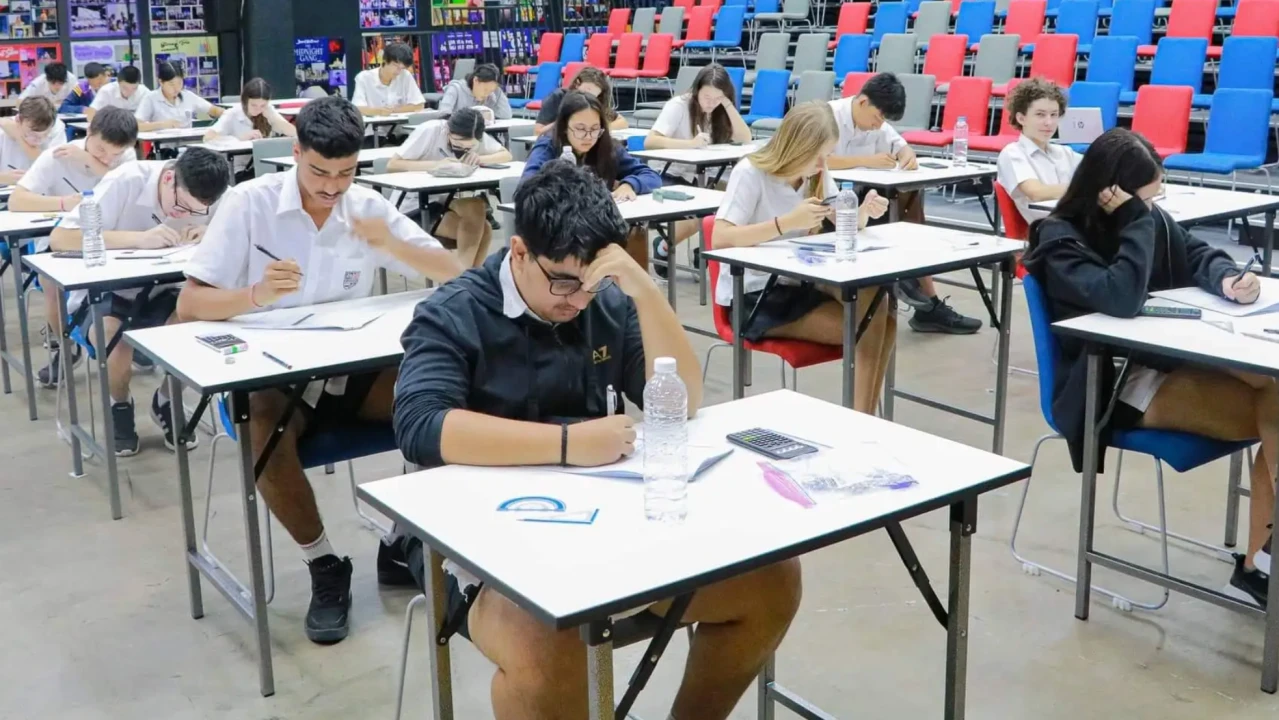
While MYP is often characterised as an inquiry-driven program, it is equally effective in producing students who perform well in high-stakes assessments. One of the greatest misconceptions about MYP is that it lacks exam preparation. In reality, MYP students are better equipped to handle exams than those who have undergone purely test-focused training because they know how to structure responses, justify reasoning, and manage time effectively.
By consistently using rubric-based grading, MYP ingrains a clear understanding of evaluation criteria, ensuring students produce well-structured answers that meet examiner expectations. When introduced early, approaches to timed writing, mark scheme analysis, and multi-step problem solving reinforce exam confidence without the anxiety-driven methods common in standardized test-heavy systems.
Educators can optimize MYP’s exam-readiness strategies by ensuring students engage in structured writing workshops, analyze marking criteria, and undergo mock exam simulations. These experiences, paired with MYP’s conceptual foundation, ensure that by DP or A Levels, students not only perform well in exams but also retain their ability to think critically, synthesize knowledge, and construct logical arguments.
Conclusion: MYP as the Ultimate Preparation for Advanced Success
The IB Middle Years Programme is not merely an alternative to IGCSE—it is a far more effective pathway for academic success in A Levels and the IB Diploma Programme. By ensuring that students complete IGCSE standards by MYP 4, engage in DP-level inquiry by MYP 5, and develop structured exam-taking techniques, MYP creates future-ready learners who are both intellectually strong and academically resilient.
Through my extensive work in education leadership, accreditation, and curriculum transformation, I have seen how schools that embrace MYP see marked improvements in student confidence, assessment performance, and long-term academic success. For educators seeking to foster independent thinking, conceptual mastery, and strong exam performance, MYP provides the best foundation for preparing students for the challenges ahead.
Your Choice
If you want students who merely pass exams, choose IGCSE. But if you want learners who think critically, argue persuasively, and thrive in complexity—choose the IB Middle Years Programme (MYP).
As an education leader committed to curriculum reform and learner empowerment, I’ve seen firsthand how the MYP does more than meet exam benchmarks—it surpasses them.
Unlike content-heavy models that rely on memorisation, the MYP builds agile thinkers through inquiry, conceptual mastery, and real-world application. By MYP Year 4, students often exceed IGCSE standards.
By Year 5, they’re developing the analytical, research, and communication skills essential for A Levels and the IB Diploma Programme.
MYP doesn’t just prepare students for success—it accelerates them toward it.
#ReimagineLearning #MYPvsIGCSE #ConceptualMastery #ExamSuccessRedefined #EducationLeadership #LearnerAgency #CurriculumThatWorks #FutureReadyEducation #IBMYP #BeyondExams