As educators and lifelong learners, we are constantly balancing the promise of new technologies like AI and ChaGPT with the realities of how they shape our students’ minds and abilities.
The recent MIT study, “Cognitive Debt when Using an AI Assistant for Essay Writing,” offers a crucial lens through which to view the impact of tools like ChatGPT on learning environments.
Reference:Kosmyna, N., Hauptmann, E., Yuan, Y. T., et al. (2024). Cognitive Debt when Using an AI Assistant for Essay Writing Task. Read the study (PDF)

The Study: A Closer Look
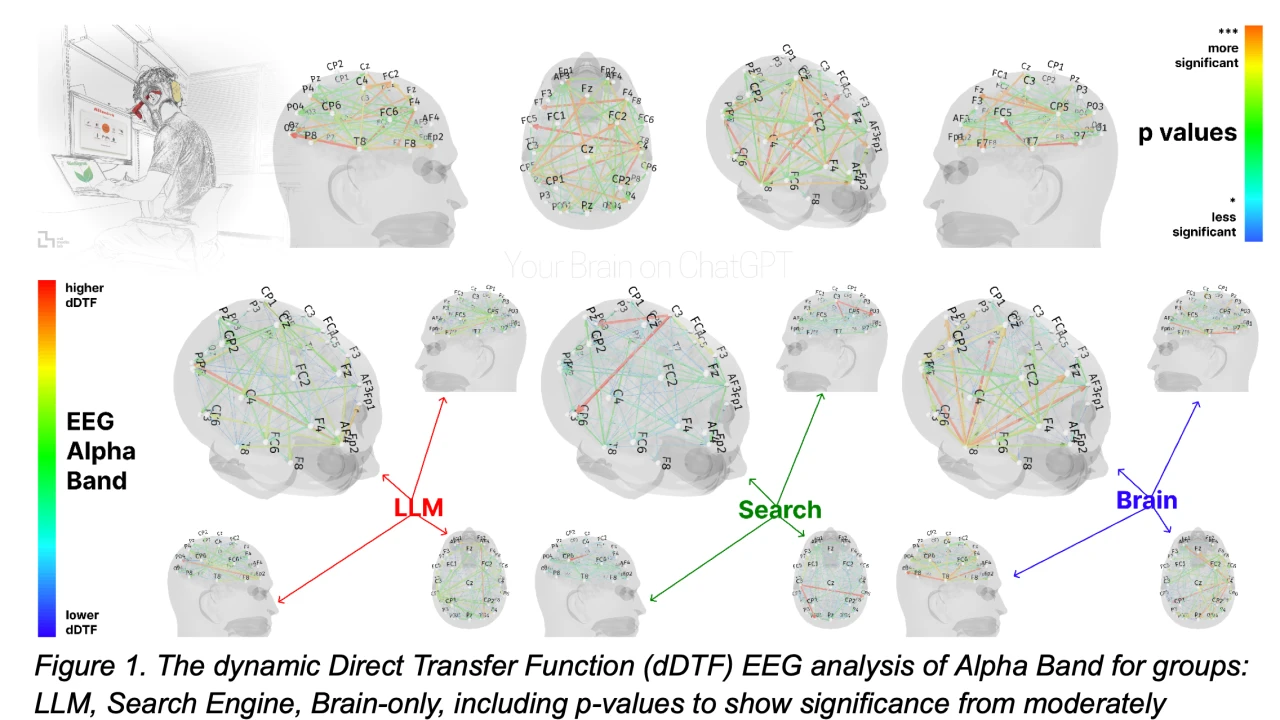
Researchers divided participants into three groups: those using Large Language Models (LLMs), those using search engines, and those relying solely on their own knowledge (“Brain-only”). Over four sessions, participants wrote essays using their assigned tool (or none at all), with brain activity measured via EEG and essays evaluated by both human teachers and an AI judge.
Key Findings for Teaching and Learning
- Cognitive Engagement and Neural Connectivity
- Ownership and Memory
- Tool Switching
- Diversity of Thought
Implications for Educators
These findings raise important questions for the classroom:
- Cognitive Debt: Over-reliance on AI tools may lead to a “cognitive debt”—a decline in deep learning, memory, and critical thinking skills over time.
- Ownership Matters: Students who engage deeply with material—thinking, writing, and synthesising on their own—develop a stronger sense of ownership and better retention.
- Tool Integration: Introducing AI after students have built foundational skills may enhance engagement and learning. Starting with AI, however, may undermine long-term cognitive development.
Practical Recommendations
- Encourage Unaided Writing: Prioritise unaided writing and critical thinking exercises before introducing AI tools.
- Foster Ownership: Create assignments that require students to reflect on and explain their work, reinforcing ownership and memory.
- Monitor Engagement: Use formative assessments to gauge cognitive engagement and adjust the use of technology accordingly.
- Balance Technology: Use AI as a supplement, not a replacement, for traditional learning methods.
A Personal Reflection
As someone passionate about education, I find these results both validating and cautionary. They remind us that while technology can amplify learning, it cannot replace the hard work of thinking for oneself. Our role as educators is to guide students in using these tools wisely—balancing efficiency with the depth of understanding that only comes from true engagement.
Implications for Teaching and Learning
This study highlights a potential “cognitive debt” from over-relying on AI tools. While they can boost short-term performance and efficiency, they may undermine long-term learning, memory, and critical thinking skills.
What does this mean for educators?
- Prioritise unaided thinking:Encourage students to write and think independently before turning to AI tools – think pair share, discuss – and perhaps refrain from AI in the classroom.
- Foster ownership: Give reflective tasks that require students to explain and defend their work.
- Balance technology: Use AI as a supplement, not a replacement, for high quality teaching and learning
- Monitor engagement: Use formative assessments and student reflections to gauge real learning—not just output.
Questions
How can do you balance the efficiency of AI with the depth of unaided learning?
How can we preparing students for a future where AI does the thinking, or one where they can think for themselves?
What strategies do you recommend to help students retain ownership and memory of their work, even when using AI tools?
Do you agree with integrating AI in your classroom?
What have you noticed about student engagement, memory, and originality?
#Education #AIinEducation #TeachingAndLearning #EdTech #CognitiveScience #FutureOfLearning #CriticalThinking #StudentEngagement