
The Vanishing Craft of Writing
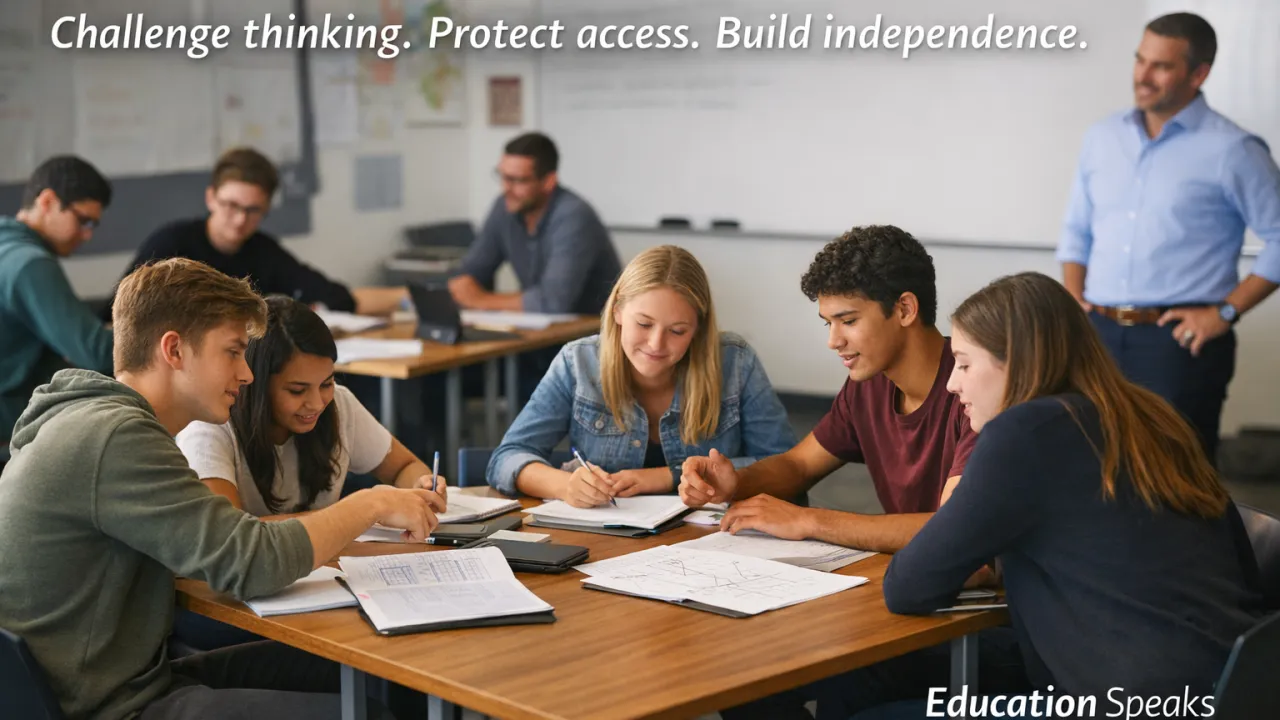
In classrooms filled with digital screens and digital tools, the act of writing is increasingly rare. Pupils now swipe, scroll, and tap with ease—but can they construct a sentence that reveals thought, emotion, or argument?
The 2025 Writing Framework offers a timely reminder: writing is not just a skill, but a craft. It must be taught, nurtured, and protected.
What happens to deep thinking when writing becomes optional?
Writing as Cognitive Architecture
Writing is how we build thought. It forces us to organise ideas, clarify meaning, and reflect on what we know. A pupil who writes, “The hungry dog barked loudly,” is not just forming a sentence—they’re learning how adjectives shape meaning, how syntax conveys action, and how language reflects thought.
The framework’s emphasis on oral composition, sentence-level instruction, and structured transcription is rooted in cognitive science. These practices strengthen memory, attention, and understanding—especially when digital distractions threaten to fragment them.
Are we teaching pupils to think, or just to consume?
Digital Distraction and the Attention Crisis
Today’s pupils live in a world of constant stimulation. Notifications, videos, and games compete for their attention, often leaving little room for sustained focus. Writing, by contrast, demands stillness. It asks pupils to sit with an idea, shape it, and express it clearly.
The framework’s routines—like “ready to write” rituals—help pupils transition from scattered attention to focused effort. These small practices reclaim cognitive space in a noisy world.
Can we expect deep writing from pupils who rarely experience silence?
The Human Touch: Teacher Assistants as Literacy Allies
In this landscape, teacher assistants are more than helpers—they are co-educators. A TA who sits beside a distracted pupil, gently guiding them back to the task, is doing more than managing behaviour. They are protecting the conditions for learning.
Whether whispering phonemes during dictation or encouraging a reluctant writer, Teacher Assistants create micro-moments of connection and clarity. Their role in implementing the framework is vital, especially for pupils who need extra support to stay focused and engaged.
Are we fully recognising the pedagogical power of teacher assistants?
Writing with Purpose and Identity
Motivation matters. Pupils write best when tasks feel meaningful. A Year 5 class writing letters to the local council about park improvements is not just practicing composition—they’re learning civic engagement. A pupil writing a story about their grandmother is not just using adjectives—they’re preserving memory.
The framework insists that writing must connect to real audiences and personal interests. This is not a luxury—it’s a necessity. When pupils see themselves in their writing, they invest in it.
Do our writing tasks reflect the lives and voices of our pupils?
Grammar and Vocabulary in Living Contexts
Grammar is not a worksheet—it’s a tool for clarity. Vocabulary is not a list—it’s a doorway to expression. The framework teaches both in context. A teacher might read a passage from a novel and ask pupils how the author conveys emotion. Pupils learn not just the rules of language, but its power.
Are we teaching grammar as a tool for meaning—or as a test of compliance?
Inclusion Through Literacy
All pupils deserve access to the writing journey. A pupil with dyslexia might use speech-to-text software, but they still participate in oral composition and sentence-building. The framework encourages early identification of barriers and adaptive support.
Teacher assistants often lead the way here, noticing subtle signs of struggle and responding with empathy and skill. Inclusion is not about lowering expectations—it’s about widening access.
Are we designing writing instruction for the margins—or just the middle?
Writing Across the Curriculum
Writing is not confined to English lessons. In science, pupils write up experiments. In history, they craft arguments. In maths, they explain reasoning. The framework sees writing as a universal tool for learning, not a siloed skill.
When pupils write across subjects, they deepen understanding and develop transferable skills. A pupil who can explain the water cycle in writing has truly understood it.
Is writing enriching subject learning—or being replaced by shortcuts?
Leadership and the Literacy Imperative
For the framework to succeed, schools must invest in curriculum design, teacher training, and strategic deployment of teacher assistants. Writing must be seen not as a checkbox, but as a cornerstone.
This is a cultural shift. It requires leaders who value writing as a craft, not just a competency. It demands courage to resist the allure of automation and reaffirm the human process of learning.
Are we building schools where writing is central—or incidental?
Literacy as Resistance in the Age of AI
As artificial intelligence reshapes education, writing becomes a form of resistance. It preserves human thought, voice, and creativity. The 2025 Writing Framework doesn’t reject technology—it rebalances it. It reminds us that literacy is not just about decoding text—it’s about encoding thought.
By reclaiming writing, we equip pupils not just to succeed in school, but to thrive in life. We give them the tools to think clearly, communicate powerfully, and engage meaningfully with the world.
In a world of artificial intelligence, what makes our pupils truly human?
The Guidance for Teachers – Reception to year 13
In Reception, writing begins with oral composition and phonics-based transcription.
Children are encouraged to say their sentences aloud before writing them down.
Teachers focus on consistent letter formation and early spelling through phonics.
For example, a child might say “The dog is big” and write it phonetically with support. The framework emphasises that early writing should be short, supported, and focused on fluency—not length. You can read more in Implementing the writing framework in reception classrooms.

In Key Stage 1 (Years 1–2), pupils begin constructing sentences with punctuation and basic grammar.
Writing tasks should be purposeful and manageable, such as recounts or simple narratives.
A typical example is a trip recount:
“First we saw the ducks. Then we had lunch.”
Teachers are encouraged to model writing and support editing.
For a practical breakdown, see New DfE Writing Framework 2025: Summary – Mrs Mactivity.
In Lower Key Stage 2 (Years 3–4), pupils start writing for real audiences and purposes.
They learn to organise ideas into paragraphs and make vocabulary choices that suit the genre.
For example, they might write a persuasive letter:
“We need more shade in the playground because…
” Teachers should teach genre features explicitly and guide pupils through planning and redrafting. Helpful strategies are outlined in Using the writing framework:
A teacher’s guide – Twinkl.
In Upper Key Stage 2 (Years 5–6), pupils refine their ability to write extended texts with control, cohesion, and clarity.
They write narratives with dialogue and description, such as:
“Tom whispered, ‘We have to hide,’ as the footsteps grew louder.”
Teachers should support independent writing, peer editing, and purposeful redrafting.
For guidance, visit Understanding the 2025 Writing Framework – Honeyguide.
Across all stages, the framework promotes writing as a structured, purposeful process—like crafting a real article.
Pupils are taught to write with audience and intent, organise ideas clearly, and make meaningful grammar and vocabulary choices.

The framework moves away from checklist-style marking and encourages teachers to assess writing based on independence, coherence, and clarity. You can explore the full guidance in The writing framework – GOV.UK.
By Year 9, pupils should be writing with fluency, independence, and a clear sense of audience and purpose.
The framework emphasises that writing must be taught as a process—planning, drafting, revising—not just practiced.
Pupils are expected to compose extended texts across genres, using varied sentence structures, precise vocabulary, and cohesive paragraphing.
For example, a Year 9 student might write a formal article on climate change, using rhetorical devices and structured argument, or craft a short story with dialogue and emotional depth.
Teachers should continue to model writing, provide feedback, and guide pupils in refining their work.
This approach is better than relying on AI-generated writing because it builds critical thinking, creativity, and authentic voice.
AI can produce grammatically correct text, but it doesn’t teach pupils how to make decisions about tone, structure, or audience.
The framework helps students understand how writing works—how to shape ideas, express opinions, and communicate effectively. It also supports long-term learning by developing transferable skills across subjects and into adult life.
By Year 11, pupils should be writing with precision, independence, and a strong sense of audience and purpose.
The framework encourages teachers to guide students through the full writing process—planning, drafting, revising, and editing—across a range of genres.
Pupils are expected to write analytical essays, persuasive arguments, and creative texts that demonstrate control over structure, tone, and vocabulary.
For example, a Year 11 student might write a literary analysis of Macbeth, exploring how Shakespeare uses imagery to convey ambition, or compose a formal article on climate justice using rhetorical techniques and structured reasoning.
This approach is more effective than relying on AI-generated writing because it cultivates critical thinking, originality, and authentic voice.
While AI can produce grammatically correct text, it doesn’t teach students how to shape ideas, make stylistic choices, or respond to a specific audience.
The framework supports long-term learning by helping students understand how writing works—not just how to produce it. It also prepares them for real-world communication, academic success, and personal expression.
By Year 13, students should be writing with full independence, sophistication, and control.
The framework encourages teachers to guide learners through complex writing tasks that demand clarity of argument, nuanced expression, and purposeful structure.
At this stage, students are expected to produce academic essays, research reports, and creative texts that reflect deep understanding and critical thinking.
For example, a Year 13 student might write a comparative literature essay exploring existential themes in Camus and Beckett, or develop a policy proposal on digital ethics using persuasive techniques and formal tone.
Teachers should support students in refining their voice, editing for precision, and writing with a clear sense of audience and impact.
This approach is more effective than relying on AI-generated writing because it builds intellectual autonomy, originality, and academic integrity.
While AI can generate text quickly, it cannot teach students how to think, argue, or express themselves authentically.
The framework helps learners develop the skills to write with purpose, structure, and insight—skills that are essential for university, employment, and civic life.
It also ensures that students understand the ethical dimensions of writing and the importance of crafting work that reflects their own thinking.
The IB Framework
By Year 13, IB students are expected to write with precision, independence, and purpose.
The IB framework promotes writing as a process: students plan, draft, revise, and reflect. In subjects like English A: Language and Literature, students analyze texts, craft comparative essays, and produce creative pieces that demonstrate stylistic control and conceptual depth.
For example, a student might write a 1,200-word commentary on a political speech, exploring rhetorical devices and audience impact, or a short story that reflects cultural identity and narrative technique.
The Extended Essay, a core component of the IB Diploma, is a 4,000-word independent research paper. It requires students to formulate a question, conduct research, and present a structured argument—mirroring the “article mindset” of the UK framework.
This process builds academic integrity, analytical skill, and writing fluency.
Unlike AI-generated writing, which may be grammatically correct but lacks originality and critical thought, the IB framework teaches students to think deeply, write purposefully, and express themselves authentically.
It values writing as a tool for inquiry, reflection, and global communication.

Summary
The 2025 Writing Framework outlines a clear, developmental journey from Reception to Year 13, emphasising writing as a process of thinking, not just transcription.
In the early years, pupils build core skills in handwriting, phonics, and oral composition, focusing on fluency and confidence over volume.
As they progress, they learn to construct sentences, use grammar meaningfully, and write for real audiences and purposes.
By secondary school, writing becomes more analytical, creative, and structured, with students expected to plan, draft, and revise extended texts.
By Year 13, learners should write with independence, precision, and insight—whether crafting essays, reports, or creative pieces.
The framework promotes clarity, coherence, and authentic voice, moving away from checklist marking and aligning with global models like the IB.
This approach prepares students for academic success, professional communication, and lifelong literacy.
We’re teaching students to write with clarity, purpose, and independence—while AI can generate essays in seconds. So what makes human writing worth teaching?
If machines can mimic structure and style, is writing still a core skill—or just a nostalgic ritual? Is the 2025 Writing Framework preparing students for a future that no longer needs writers, or is it our strongest defense against losing the art of thinking?
Let’s challenge the assumptions.
Are we cultivating creativity—or just compliance?
Can authentic voice survive in an AI-saturated classroom?
I’d love to hear your thoughts …
#WritingMatters #2025Framework #TeachWriting #ReceptionToYear13 #AuthenticVoice #PurposefulWriting #ThinkWriteReflect #AIvsHumanVoice #CriticalThinking #FutureOfLearning #AcademicSuccess #LifelongLiteracy #EducationDebate #IBAlignment #LinkedInEdu