Jeremy Hunt has just provided 2.3 billion UK pounds to boost state schools. He speaks about giving young people the skills. But is money the solution? He speaks about leveling up education.
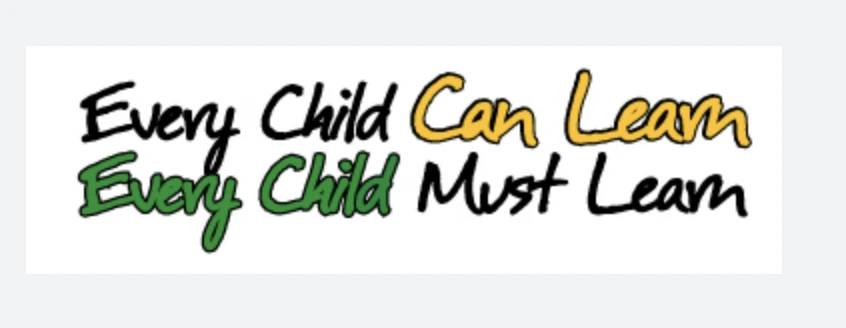
There are challenges ahead if the aim is to provide all young people with the opportunity to unlock their capabilities, to realise their potential, to make excellent progress and contribute positively to society. There needs to be a paradigm shift instilling the belief that every child can learn, not necessarily in same way.
Learner education for the 21st Century
Building young learners’ resilience, nurturing values, and developing character will provide skills for learners to work in modern workplaces and changing and uncertain environments that he speaks about.
These transferable skills include communicating, collaborating, critical thinking, problem solving, digital literacy, project management and creativity and innovation.
Learning is maximised in environments in which learners believe they are capable of learning successfully, receive supportive and helpful feedback to make decisions about their learning, and can monitor and reflect on the progress they are making.
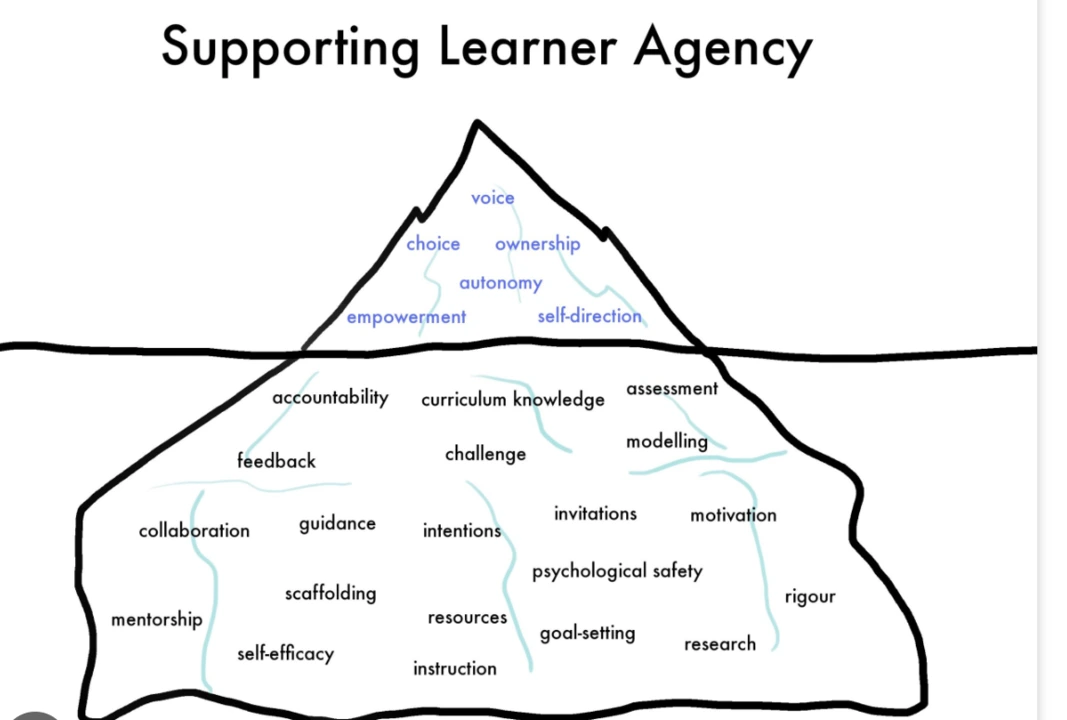
The teachers focus is on creating effective learning environments and building connections with learners’ backgrounds, starting points and individual learning needs, providing appropriate guidance and autonomy so that they can building learners’ confidence to learn understand and apply their knowledge. The focus is not just performance.
Learning environments
Learning environments are designed to encourage motivation by providing learners with a sense of control over their own learning. Motivation is enhanced by ensuring that the environment really sparks interest and curiosity. Teachers use innovative methodology. They use project-based and problem-based learning, enquiry, they make learning practical and relevant so that it is aligned with their interests and long-term aspirations. Thy use iPads, and technology to assist the learning process.
Leaning is experiential with teachers also working closely with the parents from the business environment, tripos to the local environment – industry, and aim to provide young learners with opportunities to engage with practical, real-world experiences. They use authentic assessment of the young learners’ ability encouraging them to apply what they have learned to real-life situations using collaborative group work.
They use creativity, integrating learning with ability, with feedback being used to guide ‘next steps’ in learning and assist learners to appreciate and monitor their own progress.
Finnish ideology is based on the learner’s readiness to learn and the belief that learning is an ongoing, long-term process, meaning that the points individuals the learners reach in their learning by age are not as important as the progress in their learning. The UK need to look at this closely and identify why it is so successful.
Data for learning
Teachers now have a plethora of benchmark information provided by GL assessment, CAT4 to identify student’s cognitive ability, NGRT, to establish their reading ages, Progress in Mathematics, English and Science to assist with start points, and progress and PASS to evaluate attitudes to learning. ;
This information allows schools to track students progress and plan curriculum on their cognitive potential.
Tracking of progress can inspire students if you celebrate their successes. Not just attainment or test results.
There are tools such as SeeSaw where teachers can share evidence of learning with the community a classroom platform for meaningful student engagement ;
Learner progress
By establishing where learners are in their long-term progress in an area of learning, teachers are better able to provide guidance on appropriately challenging learning goals, provide feedback to inform next steps in learning, and assist learners to see and monitor the progress they make over time.
Learning evidence is key, and this is can also be shared using Microsoft Teams which offers also the opportunity to collaborate via chats for on-line students.
Tools exist where evidence of learning can recorded against learning objectives – an important element is self-assessment and peer assessment which validates teacher assessment. Assessment is for learning and not for judging.
Assessment for learning
In general, the focus is on learners being intrinsically motivated so learning is focused on responding to a challenge that they believe is within their capabilities, and ensuring that learners feel a sense of autonomy and control over their learning. There should be a strong support for a much greater focus on knowledge application in learning and for the development of skills that enable young learners to apply their learning to meaningful challenges and problems.
For example, the study on immunity could be focused on the ‘Vaccine’ for COViD – which enable students to think critically and use sophisticated knowledge, skills understanding.
Teachers focus on teaching, coaching, mentoring, and ensuring that learners targets are appropriate, supportive, and challenging.
There is meaningful collaboration, where learners are able to plan ahead and direct their learning to achieve challenging but realistic learning goals.
Achieving a step on their learning journey towards “deeper understanding” acts as a key motivator to achieve more at a greater depth, increasing social acceptance, task orientation and improved self-esteem.
Finnish Ideology
Finnish ideology inspires young learners progress to the next learning objective once they have mastered the one. There is flexibility in relation to the timing of teaching and learning to accommodate young learners’ widely varying levels of attainment. Teachers have autonomy curriculum and teaching design in terms of what they teach and when they teach it. Most important is the relevance and focus on creativity.
Assessment encourages young learners’ sense of autonomy and control over their own learning and provide opportunities for metacognitive behaviours such as goal setting and monitoring learning progress, including the ability to reflect on long-term improvements.
It ensures every that young learner can make ongoing progress through self, peer and teacher assessment, which effectively guides the learner to the next steps on their learning journey.
Curiosity, discovery, wonder and passion aim to be the prime motivators and features of learning for every young learner throughout the school.
Skills in using technologies, sourcing and analysing information, critical and creative thinking, collaborating and communicating through practical applications, problem solving activities or investigative projects.
These are essential components in developing young learners’ abilities to build and extend their area of learning knowledge whilst developing an important range of skills in using that knowledge so that learners ‘learn how to learn’ within the curriculum and assessment framework.
Students should be seen as unique whose individual strengths are nurtured. Educational guidance by the teachers is seen as essential aiming to support and guide all students so that they can all perform as well as possible and make correct and appropriate decisions concerning their education and careers. There should be a strong support system in place.
General support should be provided firstly to meet a student’s need for support. This usually means individual pedagogical solutions as well as guidance. Intensified support should be more continuous, stronger, and individualized support for student’s learning.
An individual educational plan (IEP) can be a useful tool for a pupil. Special support consists of special education and other support needed by the student. Special education and other support received by the student form a systematic whole. Parental support, inter-professional cooperation and individual guidance are important.
Diverse learning environments and methods promote active learning. For example, field trips, cultural exchange programs, and inter-class programs that enrich the learning experience.
The joy of learning through playing is also important, particularly in early childhood classes.
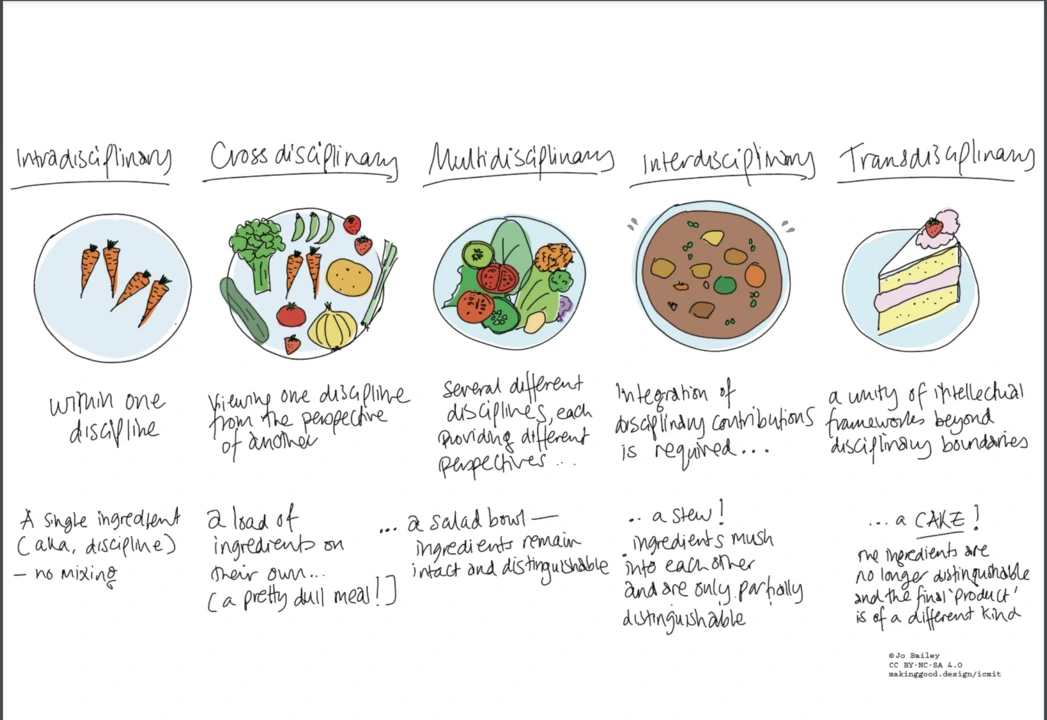
Using an integrative approach which aims for pupils understand the relationship and inter-dependencies between different subjects, for example, learning is project based where knowledge and skills of different are cross disciplinary. As students approach High School the curriculum used should prepare students to take A-level or IB, which will require additional home learning and practice of examination skills and 21st Century skills.
Jeremy Hunts announcement
Jeremy Hunt highlights that the current Education Secretary (Gillian Keegan) was an Apprentice and the importance of skills. He has announced that Sir Michael Barber will lead the Skills Reform Programme, as Jeremy Hunt wants to know will our school leavers have the same skills opportunities as Japan or Switzerland.
This does sound like positive news for education, and suggests the voice of school leaders, parents and communities about the desperate state of education funding has cut through and been listened to by the government.
Schools and school trusts have the talent and expertise to find innovative ways to improve student learning – a curriculum review is required. The money needs to go on providing high quality teaching and learning and training the teachers to start teaching through skills from Early years.
Becoming as good as Japan or Switzerland?
Could UK learn from the IB vision – to develop inquiring, knowledgeable and caring young people who help to create a better and more peaceful world through intercultural understanding and respect while still using and developing more bespoke challenging programmes of international education and rigorous assessment.
The aim is to encourage students across the world to become active, compassionate and lifelong learners who understand that other people, with their differences, can also be right. In the UK IB is being offered so the journey has began.

The emphasis of the IB Philosophy course is on “doing” philosophy
Every child will be given the best start in primary school and equipped with the skills that will help them flourish.
Leveling up education vision
The government vision is that “every person should have the same opportunity to make the most of their abilities and succeed in life.” They do go an and state that, currently, too many people’s chances of getting on in life are adversely affected by where they live.
The government’s central mission is to reverse this unfairness and end the postcode lottery of life by spreading opportunity more equally across the country and bringing left behind communities up to the level of more prosperous areas.
They state that “we need to ensure that all children are able to access excellent schools, progress to high quality technical and higher education, and go on into good jobs.”
How and when?
The statement suggests that “we will support our teachers to deliver high standards for all pupils in every classroom, including supporting behaviour and attendance, alongside targeted support for those furthest behind due the pandemic, the most vulnerable and disadvantaged”
Underpinning this, we will ensure a stronger school system, with every school able to access the support they need to improve” with “more detail to set out by the Secretary of State in the Spring”.
New funding is an opportunity
This additional funding can enable school leaders to continue to invest in the areas that positively impact educational progress and attainment, including high quality teaching and targeted support to the children who need it most. This is an opportunity to look at global good practice – and what works well in countries such as Switzerland, Finland, Japan.
PISA
Every three years in the worldwide education systems, OECD conducts PISA to test the critical thinking of 15-year-olds in math, science, and reading in over 65 countries that make up 90% of the world’s economies.
What Is PISA? Why Does It Matter?
Programme for International Student Assessment (PISA) is a global program whereby around 600,000 15 year students from different countries are put under a two-hour test to gauge their skills and knowledge, mainly in science, reading, and mathematics. PISA test questions don’t gauge memorization of facts but demand that students draw on real-world problem-solving skills and knowledge.
Since a high ranking on PISA corresponds to economic success, researchers have concluded that PISA is one of the indicators of whether school systems are preparing students for the 21st-century global knowledge economy.
In 2018 UK featured as 13th.


PISA 2022
Typically, PISA is on a three-yearly cycle, but due to the COVID-19 pandemic, PISA 2021 was postponed to 2022.
85 countries are taking part in PISA 2022, intended to take place from 26 July to 16 September 2022. Three key learning subject areas are tested: reading literacy, mathematics, and science. These are accompanied by an innovative domain that varies from cycle to cycle. Mathematics is the key focus, while creative thinking is the innovative domain.
Estonian education
This is an opportunity for UK leaders to take note and look inwards. Why do countries such us Estonia lead?
Schools in Estonia enjoy quite extended autonomy. The national curriculum leaves space for the school to develop their own curriculum. All schools can decide on their goals and the focus of studies. Principals can hire and fire teachers, decide on how to allocate the budget and evaluate the needs for teacher training. Teachers decide on the textbooks and teaching methods that they consider appropriate and would like to use in their lessons.
Teacher development in Estonia
The duration of initial teacher education for primary and lower secondary teachers ranges from 2.5 years to 6.5 years across OECD countries.
In Estonia, initial teacher education typically lasts 5 years for prospective lower secondary teachers (general programmes).It is the same length for prospective primary teachers.
Continuing professional development is compulsory for all teachers of general programmes in most countries with data, and Estonia is no exception.
At secondary level, professional development activities are compulsory for all teachers.
Early childhood education is key
Compulsory education begins at the age of 7 and ends at the age of 16 in Estonia. The range of ages for which at least 90% of the population are enrolled is longer than the period of compulsory education and goes from the age of 4 to the age of 17. This is similar to most other OECD countries, where more than 90% of the population are also enrolled for longer than the period of compulsory education.
In Estonia, early childhood education starts offering intentional education objectives for children younger than 1 and 26% of children under 3 are enrolled in early childhood education. In Estonia, 91% of all children of this age are enrolled in early childhood education, which is above the OECD average.
OECD findings
A child’s development in the first few years of life significantly predicts his or her later success in education and ongoing levels of happiness and well-being. The most effective investment governments can make to enhance education and later life outcomes is to provide a strong start in children’s early years.
Seeking to ameliorate individual or systemic learning issues at later ages is less successful and more costly than doing so earlier.
Japan teaches problem solving
Unlike some other countries that lean towards teaching students exactly what will be on standardized tests, Japan focuses on teaching students how to problem-solve. By emphasizing critical thinking, Japanese students are better able to solve problems they have never seen before on tests
Singapore a long time leader in education
So why is Singapore always a leader in education? Firstly The reason why Singapore’s education system can be so successful is because of the well-trained teachers. Our teachers receive quality training prior to teaching in a mainstream school. Singapore has also established an institution just for our to-be teachers to go to, also known as the National Institute of Education.
It is no secret that all mainstream school teachers in Singapore have to go through 2 years of NIE. Furthermore, only the top 5% of graduating students qualify to enter teaching. All teachers have to go through rigorous performance assessments to monitor their progress. Before they can become a teacher, they have to go through a series of attachments to schools and assessments. They will also need to be familiar with the MOE syllabus and what is expected of them when teaching the curriculum. Therefore, the teaching staff has to be responsible and accountable for their teaching to ensure that they are able to deliver quality education to the younger generation.
The Singapore MOE curriculum focuses on teaching specific subjects in depth rather than in width. The MOE curriculum ensures students build a strong knowledge base from the early years of education. The curriculum is also structured and designed to encourage students to perform critical thinking and problem-solving skills daily in school.
The Singapore MOE syllabus also encourages students to pursue creative thinking in class with practical real-life problems. The ultimate goal of the MOE syllabus is to build students’ problem-solving skills, creativity, and critical thinking to help solve challenging problems faced in the modern world. The curriculum prepares students to be strong in theoretical knowledge and be world-ready leaders.
)
The Singapore MOE syllabus and curriculum provide students with differentiated learning pathways that suit their learning needs and style.
Singaporean children have to go through compulsory primary education in Singapore typically from age 7 to 12. Then, it will lead them to their secondary education where they will be streamed into various different standards, namely the Technical, Academic, and Express stream.
These different streams are meant to cater to the student’s specific learning needs where they can study at a pace that is comfortable for them. There are different pathways such as the Institute of Technical Education, Polytechnic, and Junior College.
The duration takes to reach university is different with each of the differentiated learning pathways. It will take approximately 5 to 7 years for students in ITE to reach university. 3 years for polytechnic students, and 2 years for Junior College students.
The purpose of having so many differentiated pathways is to prevent isolation and offer all students a platform to perform their studies at their own pace.
The Singapore MOE understands and accepts that each student learns differently and has specific unique strengths. Thus, all these pathways can lead students to a university and achieve their educational goals at their own pace. This offers all students an equal opportunity in the real world.
In conclusion, the Singapore education system believes that education is the key to a thriving society and nation. They also believe every child deserved an equal opportunity with education.
In conclusion
Will the money promised by Jeremy Hunt lead into educational leaders believing that every child deserves an equal opportunity with education and developing strategies to implement this at classroom level?