
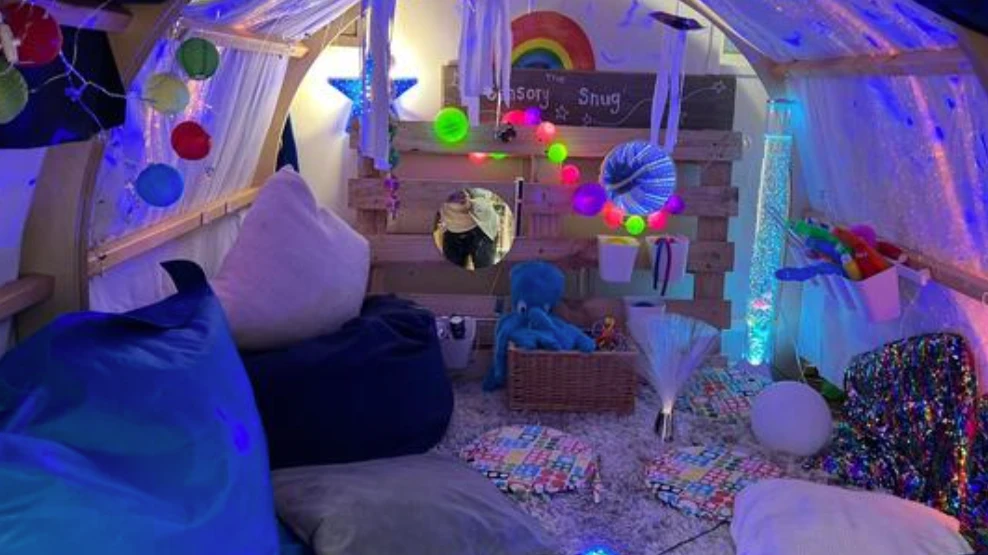
Creating Spaces of Belonging in Secondary Schools
The environment of a school communicates its values every day.
Classrooms communicate focus and achievement.
Playgrounds communicate freedom and social connection.
A well‑being hub communicates safety, belonging, and care.
A well‑being hub is a practical tool for school development.
It is not a luxury, nor is it a time‑out room or a reward.

It is a structured environment where pupils can pause, reset, and return to learning.
Research on nurture groups in the UK demonstrates that structured, supportive environments improve behaviour, attendance, and social‑emotional skills (nurtureuk, 2023).
Meta‑analyses of Social and Emotional Learning programmes show significant gains in resilience, behaviour, and attainment (Durlak et al., 2011).
Trauma‑informed practice highlights that safe, predictable spaces reduce stress responses and improve engagement (Cole et al., 2013).
The Education Endowment Foundation reports that SEL interventions can add up to three months of academic progress at very low cost (EEF, 2025).

A recent case study published in The Headteacher reinforces this evidence.
The school created a nurture room designed to look and feel different from a classroom.
The room was themed like a beach hut, with beanbags, bunting, and soft furnishings.
Trained Emotional Literacy Support Assistants delivered one‑to‑one sessions, using strategies such as Lego‑based therapy, art therapy, and structured goal‑setting.
In its first year, 47 pupils … almost a quarter of the school …accessed the room.
Teachers reported improved confidence, behaviour, and academic attainment, while parents actively sought access, recognising the value of the provision.
This case study demonstrates that nurture spaces are not theoretical.

They are practical, evidence‑based, and measurable in impact.
Greyhound School applied these principles to its own context.
A small office was redesigned with sofas and soft lighting, becoming a morning “settle space” that reduced late arrivals and improved lesson starts.
A library corner was adapted with study pods and student artwork, hosting exam stress workshops that improved focus and revision readiness.
A corridor alcove was screened and furnished to create a peer mentoring zone, where sixth‑formers supported younger pupils and behaviour referrals decreased.
Finally, a flexible multi‑purpose hub was established for drop‑ins, resilience groups, and one‑to‑one mentoring.

Within the first term, behaviour referrals dropped by 25 per cent and attendance improved for pupils who accessed the hub regularly.
These examples matter because they show that a hub does not require a new building.
They show that a hub can be created from existing space.
They show that a hub is purposeful, structured, and linked to school priorities.
Most importantly, they show measurable impact on behaviour, attendance, and pupil confidence.
Leaders who wish to begin this journey can start by identifying one under‑used space and repurposing it.
They can allocate a trained adult to oversee the hub, timetable structured use for resets or mentoring, and link the provision explicitly to behaviour, safeguarding, and personal development.
Collecting baseline data on attendance, behaviour, and engagement ensures that impact can be measured and shared with staff, governors, parents, and inspectors.
A well‑being hub is not complicated. It is not expensive.
It is not optional.
It is a visible sign of ethos, a preventative tool, and a strategic investment in culture and learning.
When pupils thrive emotionally, they thrive academically.
When they thrive academically, the whole school community benefits.
And when the whole school community benefits, the school vision is fulfilled.
Summary
Creating a well‑being hub is one of the most effective ways schools can demonstrate their ethos in action.
Far from being a luxury, these spaces provide pupils with a structured environment to pause, reset, and return to learning. Evidence from nurture group research, Social and Emotional Learning meta‑analyses, and trauma‑informed practice shows that safe, predictable spaces improve behaviour, attendance, and attainment.
Case studies highlight the impact: a London school reduced late arrivals through a repurposed office; a Dubai school improved exam readiness with a library hub; a Manchester school cut referrals with a peer mentoring zone; and an international school in Cyprus saw a 25% drop in behaviour incidents through a multi‑purpose hub.
These examples prove that hubs do not require new buildings, only vision and leadership. When pupils thrive emotionally, they thrive academically – and when they thrive academically, the whole school community benefits.
#EducationLeadership #WellbeingInSchools #Nurture #SchoolImprovement #StudentSuccess #Safeguarding #Inclusion #SocialEmotionalLearning #EducationSpeaks