Through many years of observing learning in over 15 countries, including the UAE where the framework has high stakes, I believe that lesson observations, while providing valuable insights into teaching and learning, may not always be the most effective or comprehensive way to improve the overall educational experience.
Most teachers will have their views on this and it is perhaps the most single factor that can drive good creative teachers to leave the profession.
Impact of lesson observations
Firstly they offer limited perspective- a snapshot of a teacher’s performance during a class which might not capture the full range of a teacher’s abilities, teaching style, or the broader learning environment and teacher relationship with the students.
Observations are often subject to the personal perspectives and biases of the observer which can lead to inconsistencies and may not accurately reflect the teacher’s overall effectiveness leading to damaging self belief and confidence if feedback is critical rather than constructive.
Do teachers need to feel pressurised or should they be happy leading learning.
The added pressure and anxiety always impacts teaching performance and does not fully represent their typical approach – they may not capture the broader context of the teacher’s leadership of learning, such as their personalised lesson planning process, their ongoing professional development, or their interactions with students outside of the observed lesson.
They may also not observe external factors that can influence teaching and learning, such as students’ prior knowledge, or additional support provided to learners – particularly in improving their well being.
I believe that a more holistic approach to performance evaluation and professional development should include self-reflection, peer collaboration, ongoing professional learning communities, student feedback, and evidence-based assessments of student learning.
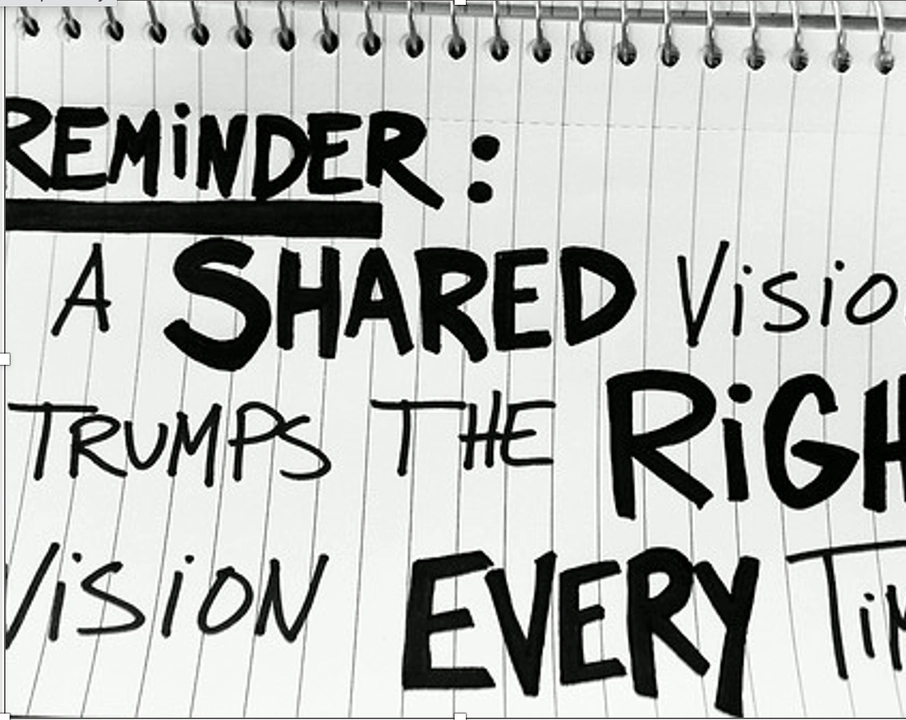
Developing a shared vision of what good learning looks like – and this can be different in every classroom!
This can providing a variety of feedback sources and professional development opportunities, empowering teachers to become leaders of learning and find personalised and effective ways to improve learning outcomes.
I would also suggest that the manner in which lesson observations are conducted, building relationships, having open discussions about vision with teachers being part of this vision building develops a sense of ownership, and the overall learning culture.
Utilised effectively, empowers teachers to self reflect rather than be judged, – lesson observations can contribute to a positive and supportive school environment, fostering professional growth and high morale among educators.
On the other hand overly critical feedback can lead to demoralisation, causing a loss of confidence and motivation as well as heightened stress and anxiety leading up to and during observed lessons, negatively impacting their overall morale and well-being.
Teachers may feel that observations are conducted unfairly or lack constructive intent, leading to feelings of distrust and resentment within the school community.
After all, the aim of a lesson observation should be how to improve students learning.
A focus rubric on improving a high quality learning environment – a possible strategy?
Creating a vision for what high quality learning looks like and empowering teacher and student ownership is key in providing guidance for teachers to improve in a leader rather than boss culture.
- Consider how learning can be focused on relevant real-world tasks or problems – and again these may differ for each child as they may come from different ‘worlds’!
- Developing collaboratively a rubric to embrace what high quality learning looks like in the classroom and using it as a focus for professional learning – hidden rubrics and criteria are not empowering learning for teacher or learner.
- Pedagogical leaders should develop a school culture that fosters and values professional learning as key, in a blame free, non critical environment.
- Pedagogical leaders should engage in personal communication to ensure the enhancement of the teaching and learning in order to address the overarching mission of the school and be seen as mentors, inspirers, motivators….
- Equally importantly, it is about providing direction and guidance and the modelling of good practice to ensure high quality teaching and learning throughout the school. Team teaching, sharing what works with the teachers.
- Effective school leaders must see themselves, first and foremost, as pedagogical leaders not assessors of teachers.
- Sustainable pedagogical leadership is the goal, most likely to be achieved when leadership is devolved throughout a leadership team
- The pedagogical leadership team will have overarching responsibility for ensuring that the teaching and learning will be enriched in line with the philosophical implementation requirements of the curriculum.
- Success can be as a result of evidence that learners are able to apply their learning to the context of real-world problems using informational and skill-based evidence and be able to apply learning to real-world tasks or problems. Not always evident in an observation! Learning is not formulaic….
- The overall aim is to support and empower highly effective staff development with a discern with a global perspective, to be able to reflect with imagination and insight, to think critically, rationally, creatively and independently, to act with self-efficacy, confidence and engagement, to collaborate with empathy for others and to work towards a beneficial impact in the world.
High Quality Teaching and Learning
Agreeing a vision to takes into consideration the emotional and physical needs of the learners and teachers and ensuring a safe supportive learning without fear.
Where learning experiences challenge conceptual understanding using an inquiry and personalised approach to learning embracing technology as a tool – with an emphasis on developing critical thinking, creativity, and innovation. This can look messy in an observation – and is not formulaic. And we are dealing with emotions, attitudes to learning, tiredness, motivation, what inspires one learner may not inspire the other….personalising and recognising all learners do not learn in the same way and at the same pace.
Where the learning environment is aimed to strengthen collaborative learning, speaking, listening, reading and writing and other forms of communication – in a safe environment – not a perfect environment.
Where the curriculum and teaching has an emphasis on providing an experiential learning experience – again – this looks different for each child, using both local and global contexts.
A high-quality teaching and learning environment reinforce the values of integrity, empathy, and compassion for both teacher and learner.
There is always a feeling of wow after a lesson as by self reflection and professional dialogue we have found what works better – and are inspired to try different strategies next time.
Fires of passion – not fear
Teaching should be inspiring, motivating and the challenge should light fires of passion, not fires of fear.