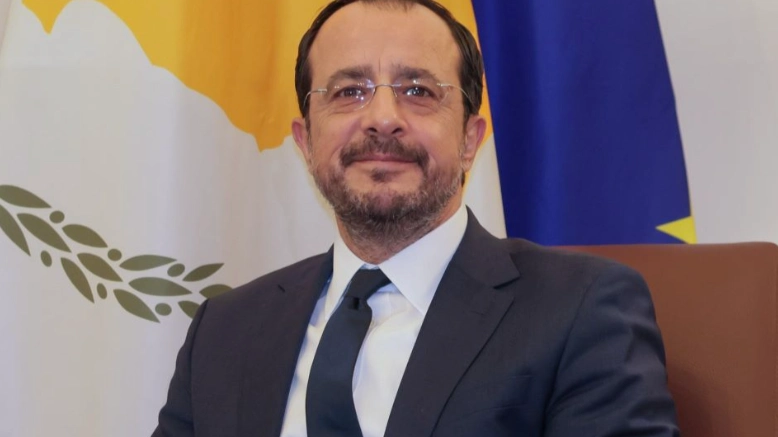
As President Nikos Christodoulides wisely stated, “Education is the foundation upon which we build our future.” In Cyprus, this belief is already at work.
Cyprus schools—both public and private—are forging unique paths toward innovation, inclusivity, and excellence. Yet, as we stand at this crossroads, the opportunity to drive lasting, impactful change has never been more urgent.
Building on a Promising Foundation Cyprus’s dual education system is both Cyprus’s strength and their opportunity.
Public schools, rooted in the Cypriot National Curriculum, deliver stability and universal access.
In parallel, private institutions excel in integrating global frameworks like the International Baccalaureate (IB) and Cambridge programs, enriching the learners with international perspectives and inquiry-based teaching.
Together, these two models offer a dynamic tapestry of possibilities for the children of Cyprus.
Recent reforms have already begun to yield results.
Initiatives such as the expansion of all-day schools have transformed learning environments, providing extended support for academic, social, and emotional growth.
Modernised curricula that emphasise skills-based learning, critical thinking, and adaptability are giving the students a competitive edge for the challenges of tomorrow.
Efforts in special needs education and multilingual programs have further proven that innovative, inclusive approaches can work—and work well.
Facing Challenges with Opportunity
Despite these successes, Cyprus is not without challenges.
Limited collaboration between public and private sectors sometimes hinders the sharing of best practices.
Educators across the board find themselves navigating heavy workloads and the complexities of diverse, multilingual classrooms.
Meanwhile, uneven access to digital tools and infrastructure has created disparities that need to be addressed if every student is to benefit from the National Digital Strategy.
Yet, these challenges also light the way forward.
They call the Cyprus community to reimagine not just what education can be, but how they can make transformative change together.
By embracing international best practices—from the IB’s Creativity, Activity, Service (CAS) framework to the interdisciplinary approaches developed abroad—there is an opportunity to build a more unified and inclusive system.
The research and pilot projects are already indicating significant potential for growth when innovation crosses institutional boundaries.
Forging a Strategic Path Forward
I suggest that the journey from potential to progress hinges on deliberate, collaborative next steps.
Cyprus can build on the success of all-day schools and multilingual initiatives by extending these models to underserved communities.
By creating joint projects between public and private schools, they can ensure that every child, regardless of background, benefits from a rich, supportive learning environment.
Empowering Educators
Establishing a national professional learning network would allow educators to share innovative teaching strategies—especially those adapted from international curricula—across sectors.
Such a network could foster ongoing, contextual professional development that truly meets the challenges of today’s classrooms.
AI and digital technology
While pilots of AI-powered and adaptive learning tools have shown promising impacts on literacy and numeracy, a coordinated effort is needed to bridge gaps in digital infrastructure.
A collaborative framework for technology integration—developed with input from public and private stakeholders—would ensure the digital future is both ethical and accessible.
Deepening Research and Policy Partnerships
Longitudinal studies on initiatives such as multilingual instruction and service-based learning can provide the data necessary to inform policies that work.
Creating research collaborations between schools and international experts would not only validate efforts but also lead to more data-driven and adaptive reforms.
Fostering a Culture of Global Citizenship
With its multicultural identity, Cyprus is uniquely positioned to lead in global citizenship education.
By integrating community engagement, service learning, and intercultural dialogue more widely into our curricula, Cyprus can nurture empathetic leaders ready to work—locally and globally—for a better future.
The success Cyprus has made is inspiring, yet the journey has only just begun.
I believe that with strategic, collective effort Cyprus can transform these challenges into meaningful opportunities—a transformation that will benefit every learner on the island and contribute to a global standard in education.
Mr. President, your vision for education has already sparked substantial change.
There is an opportunity for stakeholders and diaspora to come together, pool their expertise, and set a new benchmark for what education can be.
Every step toward innovation and inclusion not only strengthens Cyprus’s national fabric but also inspires the broader global community.
I am sure, Mr President that you can create an education system that is truly transformative—where every child has the opportunity to thrive, every teacher is empowered, with Cyprus’s future being built on the solid ground of shared vision and action.
#TransformativeEducation #CyprusEducation #GlobalCollaboration #EducationalInnovation #InclusiveLearning #FutureReady #EdTechIntegration #GlobalCitizenshipSources
References
[1] [PDF] Cyprus Country Report – NESEThttps://nesetweb.eu/wp-content/uploads/2019/06/2013-Cyprus-Country-Report-Educational-Policies-in-the-Greek-speaking-Public-School-System.pdf [2] Organisation of private education – Eurydice – European Union https://eurydice.eacea.ec.europa.eu/national-education-systems/cyprus/organisation-private-education [3] The Cypriot National Curriculum – Globeducate https://www.globeducate.com/teaching-and-learning/respected-international-curricula/the-cypriot-national-curriculum [4] Private Schools vs Public Schools in Cyprus: Understanding the Key … https://www.cyprusprivateschools.com/article/private-schools-vs-public-schools-in-cyprus-understanding-the-key-differences.html [5] Structure of Education in Cyprus, Primary, Secondary, Higher Edu https://www.cypruseducation.info/education-system/structure-of-cyprus-education.html [6] Education in Cyprus | Public and private education – HKCY Properties https://hkcyproperties.com/useful-info/education-in-cyprus/ [7] The Cyprus K-12 Education System – Primary and Secondary https://www.cypruseducation.info/k12/cyprus-k-12-education-system.html [8] Primary education – Cyprus – Eurydice – European Union https://eurydice.eacea.ec.europa.eu/eurypedia/cyprus/primary-education [9] Cyprus | NON-STATE ACTORS IN EDUCATION – Education Profiles https://education-profiles.org/europe-and-northern-america/cyprus/~non-state-actors-in-education