
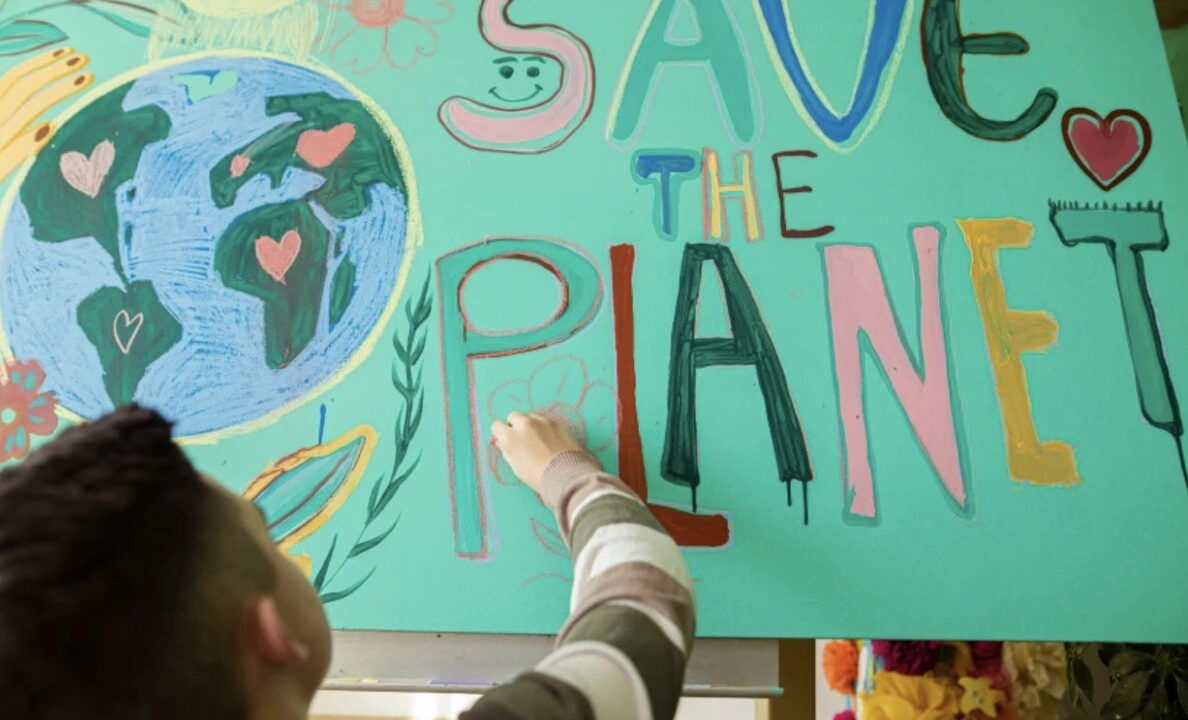
IB DP Biology has taken climate change very seriously – with a focus on empowering students.
Using these criteria and planning backward by design to even 3 year olds can serve a powerful forum of student voice and actions.
Student agency and self-efficacy will lead to actions.
How we can help in schools
The questions in IB DP syllabus have highlighted this key area.
- What are the impacts of climate change at each level of biological organisation?
- What processes determine the distribution of organisms on Earth?
What we need to do is educate even our youngest children on what is happening to the world – and empowering them to take action.
These questions are not just for IBDP students!
The curriculum needs to ensure that the young people in our charge think critically about their impact in and on the world and to prepare students with the skills required to understand that this is complex – but they can do something about it because students can develop resilience and the positivity that is needed to tackle the climate crisis. This is surely what we mean about a high quality teaching and learning environment? Like every teacher is a teacher of literacy, can we make every teacher an environment teacher – just like we want global or international relevance?
Schools can make a difference
As a starter lets make it our responsibility and start asking the right questions and lead the curriculum from age 3!
Below – you may find this heavy – but it need not be!
Some key starter questions…
Why do we get carbon dioxide and methane in the atmosphere and what is the impact?
What do know about the release of carbon dioxide from deep oceans?
Do we know that there are increases in absorption of solar radiation due to loss of reflections from snow and ice,?
We teach students about seasons, about the heart, chemical equations….so why not the above?
How many of us know that accelerating rates of decomposition of peat and previously undecomposed organic matter in permafrost, release of methane from melting permafrost and increases in droughts and forest fires?
Did you know this?
Are we aware that warmer temperatures and decreased winter snowfall are leading to increased incidence of drought and reductions in primary production in taiga, with forest browning?
Do we even know what a Taiga Forest is? Many of our children do…
The warmer temperatures increase the frequency and intensity of forest fires, which results in carbon combustion. Do you recognise this?
Thus this leads to potential loss of breeding grounds – for example the emperor penguin (Aptenodytes forsteri) due to early breakout of landfast ice in the Antarctic and loss of sea ice habitat for walruses in the Arctic.
90% of Emporer Penguins will be extinct by the end of the century
We teach our children to love Penguins – such wonderful animals – we take them to the zoo, to see them.
Climate change
Warmer surface water can prevent nutrients coming up to the surface, decreasing ocean primary production and energy flow through marine food chains. So guys, what is Primary Production? Do we depend on it?
CLIMATE CHANGE and other human impacts may have made Humboldt’s Tableau unrecognizable
The Montane Bird – species – its a bird that is telling us stories
As evidence-based examples, include for tropical-zone montane bird species in New Guinea and range contraction and northward spread in North American tree species.
Effects of Climate Change on Montane Birds of the Northeast
How about Corals? Why are they important?
Increased carbon dioxide concentrations are the cause of ocean acidification and suppression of calcification in corals.
Ocean acidification refers to a reduction in the pH of the ocean over an extended period of time, caused primarily by uptake of carbon dioxide (CO2) from the atmosphere.
How does ocean acidification affect coral reefs?
Increases in water temperature are a cause of coral bleaching. When water is too warm, corals will expel the algae (zooxanthellae) living in their tissues causing the coral to turn completely white. This is called coral bleaching. When a coral bleaches, it is not dead. Corals can survive a bleaching event, but they are under more stress and are subject to mortality.
The dangers of coral bleaching
Loss of corals causes the collapse of reef ecosystems.
So a great deal of damage happening to corals….
How about Trees? Is planting the solution?
Do plantations of non-native tree species or re-wilding with native species offer the best approach to carbon sequestration?
Rewilding is a progressive approach to conservation. It’s about letting nature take care of itself, enabling natural processes to shape land and sea, repair damaged ecosystems and restore degraded landscapes. Through rewilding, wildlife’s natural rhythms create wilder, more biodiverse habitats.
So why is rewilding so controversial?
The main reason that many people are strongly opposed to the idea of rewilding is because of its potential to hurt local enterprises, which rely on fisheries, livestock, crop farming and hunting land – for example a sheep farmer can’t graze sheep and an arable farmer can’t grow crops in an area that is being rewilded. Projects reinstating natural habitats in areas need to be met with agreement on both sides.
And Peat – is this important?
Peat formation naturally occurs in waterlogged soils in temperate and boreal zones and also very rapidly in some tropical ecosystems.
Is finding and protecting peatlands enough in a warming world.
Photoperiod and temperature patterns are examples of variables that influence the timing of biological events such as flowering, budburst and bud set in deciduous trees, bird migration and nesting.
An ecosystem temperature may act as the cue in one population and photoperiod may be the cue in another.
For example- the Arctic mouse-ear chickweed (Cerastium arcticum). What signal does this provide.
Is the growth of Arctic mouse-ear chickweed (Cerastium arcticum) a signal?
How about movement of herds – caribou for example
And caterpillars destroying forests?
Beetles?
Why are beetles destroying forests?
The changing colour of owls?
Why is the tawny owl (Strix aluco) changing colour?
Climate change – less snow has an impact on the Tawny Owl
And how about the migration on tits?
How can we continue to teach ecology and perfect ecosystems when all this is happening?
We need to start teaching from where we are – even if it does mean rewriting curricula and changing exams… what is more valid? What is more important?
We all need to take the first step….