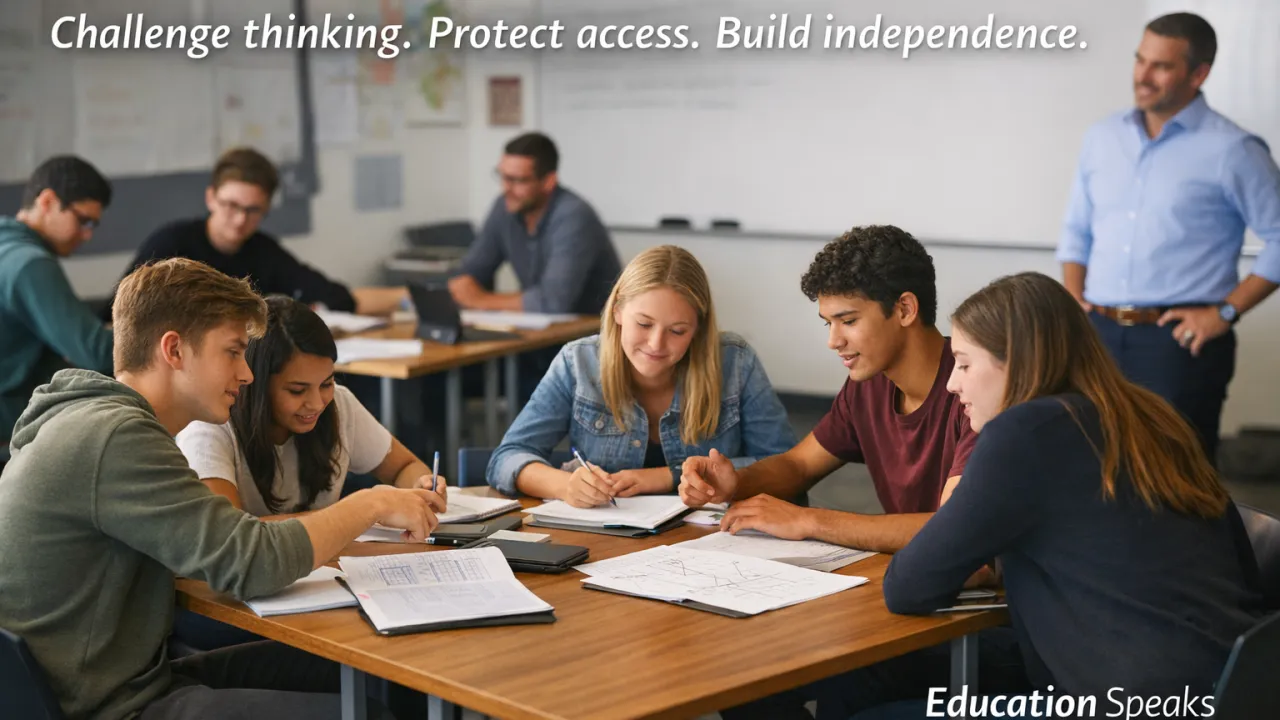

School culture is the invisible yet powerful force that shapes how a school operates. It reflects shared values, vision, and norms, defining how students, teachers, and staff interact and work together.
A strong school culture promotes trust, collaboration, and a sense of belonging, while a weak one can hinder progress and morale. When paired with the International Baccalaureate (IB) framework, schools can leverage a globally recognised approach to enhance their culture and achieve sustainable improvement.
As early as 1932, Willard Waller described schools as “social organisms” in The Sociology of Teaching, emphasising their unique rituals, traditions, and interpersonal dynamics. Later research by Deal and Peterson highlighted unwritten rules and expectations that permeate everything within a school—from how people act to how they collaborate.
Similarly, Schein’s concept of organisational culture underscores how these unwritten directives guide behaviour in specific situations.
These principles align closely with the IB’s emphasis on fostering inclusive environments where collaboration and mutual respect are central.
The IB framework enhances school culture by focusing on the whole learner. It nurtures academic success alongside personal growth, intercultural understanding, and lifelong learning skills.
The IB Learner Profile instills attributes like curiosity, empathy, and resilience in students across all programs—from the Primary Years Programme (PYP) to the Diploma Programme (DP).
This holistic approach creates a sense of belonging and shared purpose that strengthens school culture. Inclusivity is another cornerstone of both school culture and the IB philosophy.

The IB’s self-review framework supports schools in identifying barriers to learning and implementing strategies to ensure all students—regardless of background or ability—have access to high-quality education.
Inclusive practices such as differentiated instruction and flexible grouping empower students to succeed while fostering collaboration among teachers, parents, and special education professionals. Feedback plays a pivotal role in improving school culture.
Community-wide feedback—through surveys or focus groups—helps schools identify systemic trends, while individual feedback supports personal growth for teachers and staff.
The IB integrates these practices into its inquiry cycle of reflection and action, ensuring continuous improvement.
For example, schools can use feedback to refine teaching methods or address gaps in communication and extracurricular opportunities.
Professional development is integral to creating thriving school cultures under the IB framework.

By offering workshops on inclusive practices or inquiry-based teaching strategies, schools empower educators to remain at the forefront of innovation.
This investment in teacher growth directly translates into improved student outcomes and fosters a dynamic learning environment.
A strong school culture has far-reaching benefits: it enhances teacher retention, boosts staff satisfaction, engages students in meaningful learning experiences, and reassures parents that their children are part of a nurturing community.
By combining intentional efforts to improve culture with the IB’s globally validated standards, schools can transform into vibrant communities where everyone thrives.

As we plan for the future of education, it’s clear that cultivating positive school cultures requires intentionality, reflection, and sustained effort.
By leveraging feedback-driven strategies alongside the IB framework’s principles of inclusivity and collaboration, schools can create environments where trust, growth, and excellence flourish.
Sources [1] LinkedIn Articles in 2024: The Definitive Guide – THM SEO Agency https://tomislavhorvat.com/linkedin-articles-the-definitive-guide/ [2] School leader resources – International Baccalaureate® https://www.ibo.org/ib-schoolwide-adoption/where-to-begin/school-leader-resources/ [3] Inclusive education in the IB – International Baccalaureate® https://www.ibo.org/programmes/inclusive-education-in-the-ib/ [4] Best Practices & Examples for Writing Top LinkedIn Articles https://www.longshot.ai/blog/linkedin-articles-writing [5] [PDF] The IB guide to inclusive education: a resource for whole school … https://peda.net/kuopio/lukiot/lyseonlukio/ib/san/testi/the-ib-guide-to-inclusive-education.pdf:file/download/20e209d004747c3c69b91f3886695676de1fe316/The%20IB%20guide%20to%20inclusive%20education.pdf [6] Equity and inclusive education in the IB – International Baccalaureate® https://www.ibo.org/programmes/equity-and-inclusive-education-in-the-ib/ [7] How To Write Engaging LinkedIn Articles In 2025: Tips & Examples https://100poundsocial.com/blog/linkedin/write-engaging-linkedin-articles/ [8] Inclusive Education in the IB: Strategies for Supporting All Learners https://www.linkedin.com/pulse/inclusive-education-ib-strategies-supporting-all-learners-ian-barnes-q6hle [9] Building practices for inclusivity within the IB community https://www.ibo.org/news/news-about-the-ib/building-practices-for-inclusivity-within-the-ib-community/ [10] LinkedIn’s Six Post Formats: Best Content Creation Practices https://www.linkedin.com/pulse/linkedins-six-post-formats-best-content-creation-isabelle-van-lier-bicof [11] A Comprehensive Guide To The International Baccalaureate (IB … https://blog.aiadubai.com/a-comprehensive-guide-to-the-international-baccalaureate-ib-framework [12] [PDF] The IB and inclusion: An update https://www.ibo.org/contentassets/60d1e68eafc7437faf033f8d9f5c6d6d/saturday-ib-inclusion-jayne-pletster.pdf