Multilingualism, fostering intercultural understanding, and promoting global engagement can provide our learners with the skills to become global influencers. schools can drive this – could this lead to the future of education
Multilingualism
Schools can incorporate multiple languages in the curriculum to promote linguistic diversity and proficiency. This can be done by offering language courses that are not only limited to the local language but also include foreign languages.
Language learning isn’t only about fluency but also about understanding and appreciating different cultures and applying this knowledge in the world of work to develop positive working relationships.
Language Immersion Programs
If schools offer immersion programs where students can fully engage in a particular language to foster fluency such as spending time in a country where the language is predominantly spoken or engaging in global projects digitally – this immersive experience not only enhances language skills but also provides a deeper understanding of the culture associated with the language.
Language Exchange Programs and their value
Schools can arrange exchanges with schools in different countries to promote language learning through real-world interactions. This would provide students with the opportunity to practice the language they are learning in a real-life setting while also learning about the culture and customs of the country they are interacting with.
Cultural Appreciation Courses
Schools can introduce courses that delve into different cultures, traditions, and histories to cultivate empathy and understanding. This would involve studying different cultural practices, customs, and histories, allowing students to appreciate the rich diversity present in the world.
International Exchanges
Schools can also encourage student exchanges to promote firsthand experiences in different cultural settings. Experiencing different cultures first hand can significantly contribute to developing an open-minded and culturally sensitive mindset in students.
Cultural Events
Schools can also organise cultural events where students can showcase and celebrate their own cultures while learning about others. These events could include multicultural festivals, food fairs, or art exhibitions, creating an environment where students can learn, share, and celebrate different cultures.
Service Learning Projects
Importantly schools can implement service-learning projects that address global issues and encourage students to take proactive roles in global citizenship. This approach combines community service with academic instruction, emphasising critical thinking and personal reflection while encouraging a heightened sense of social responsibility.
They can establish partnerships with schools worldwide for collaborative projects that promote global awareness. Collaborative projects with international schools can foster a sense of interconnectedness and understanding of global issues among students.
Simulated Global Scenarios
Schools can create simulations of global challenges for students to work together in finding solutions, fostering teamwork and critical thinking. Simulations can range from Model United Nations conferences to complex global issues in which students work together to develop solutions, encouraging teamwork and critical thinking in a global context.
Why is this important?
Considering these points, it’s evident that the integration of multilingualism, intercultural understanding, and global engagement in the real life education would effectively nurture students to become global citizens equipped with the required skills and mindset for a connected and diverse world.
“Fostering Global Citizenship through Multilingualism, Intercultural Understanding, and Global Engagement in International Baccalaureate Education” [here](https://scholarlyarticlewebsite.com/fostering-global-citizenship-multilingualism-intercultural-ib-education).
This article delves into the practical implementation of the strategies outlined in above, providing valuable insights and evidence of their effectiveness.
It will further enhance your understanding of the strategies and their impact on nurturing students to become global citizens.
By nurturing multilingualism and cultural appreciation, students will develop a broader perspective on global issues, cultural diversity, and international cooperation.
This will equip them with the necessary skills to navigate a globally interconnected world in 2040 for example engaging in simulated global scenarios and service learning projects will enhance students’ critical thinking skills and their ability to tackle complex global challenges.
Participation in language exchange programs and international collaborations will foster effective cross-cultural communication skills.
These skills will be essential for students to interact with individuals from diverse backgrounds and nationalities in the increasingly globalised landscape of 2040.
Exposure to different languages, cultures, and global perspectives will enhance students’ adaptability and resilience. These qualities will be crucial as students navigate an ever-changing world with evolving technological advancements, economic shifts, and social changes.
Through international exchanges and cultural events, students will develop a deep appreciation for global diversity and interconnectedness.
This global perspective will enable them to understand and respect different worldviews, contributing to their readiness to thrive in the culturally diverse environments of 2040.
Engaging in global collaborations and service learning projects will empower students to take on leadership roles and collaborate effectively on global issues.
These experiences will nurture their sense of responsibility and capability to drive positive change in their communities and the world at large by 2040.
The way forward
The integration of multilingualism, intercultural understanding, and global engagement will not only prepare students for the challenges of 2040 but also equip them with the mindset and skills needed to thrive in a rapidly evolving and interconnected global society.
This holistic approach to education will undoubtedly empower students to become future leaders, change-makers, and contributors to a more harmonious and sustainable world.
An interesting read can be found https://www.linkedin.com/pulse/classrooms-2040-how-technology-shape-next-generation-daniel-bron/
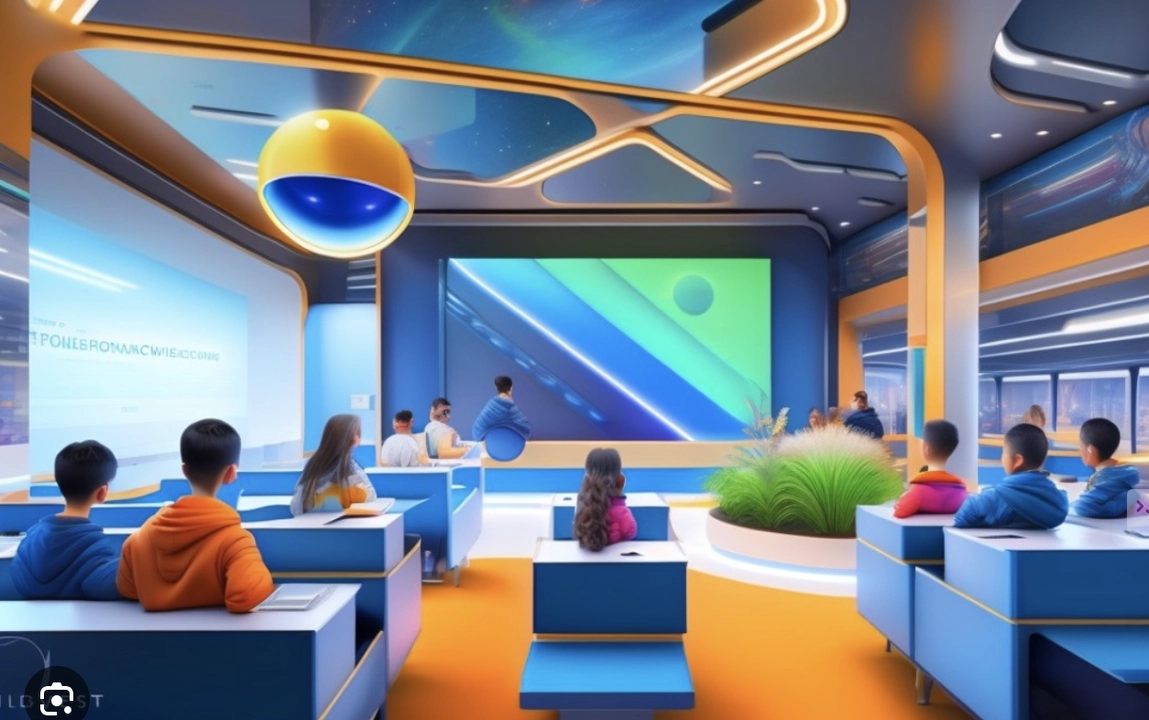
Daniel Bron discusses what classrooms of 2040 will look like.
He is inspired and invigorated by the transformative potential of technology – from AI and IoT to BCI and Web3, which promise to reshape the educational landscape, making learning more personalised, engaging, and I would suggest more globally accessible.
There is clear evidence AI can tailor education to individual student needs, providing personalised tutoring and freeing teachers to focus on inspiring their students. IoT promises to create intelligent classrooms, providing real-world data for experiential learning and enhancing student well-being.
Daniel suggests that BCI holds the potential to revolutionise how we interact with digital content and enhance cognitive abilities.
He speaks about Web3 as offering a vision of decentralised education, where learning is democratised, and student data is secure and private.
The challenges include privacy, security, and equity issues loom large, requiring careful regulation to ensure the ethical use of technology in education as well as fostering digital literacy among students and educators, ensuring they can navigate this digital future.
The future of education
The future of education is not just about technology.
It’s about people.
Most important are the human elements of curiosity, creativity, and passion for learning and global impact.
Empowering our students
Education CAN empower students to become future leaders, and change-makers.
We can provide our students with the skills to become global influencers.
There are many strategies and above all the students want to be involved and active in their learning. They want to understand why!
Classrooms of 2024 – 2040
In classrooms we can engage students in simulated global scenarios with children in other countries. Working together. They know how to do it already…
We can involve them in providing service developing projects to help the local community by using their students’ critical thinking skills solve local and international problems.
We can do this in our classrooms and use the local environment. Does learning need to be about sitting in rows, memorising and taking tests?
We can get them involves in language exchange programs and international collaborations..
We can expose them to different languages, cultures, and global perspectives to enhance their adaptability and resilience.
We can plan international exchanges and cultural events, students so that they develop a deep appreciation for global diversity and interconnectedness.
These experiences will nurture their sense of responsibility and capability to drive positive change in their communities and also the world at large by 2040.
And there is compelling evidence that inspired, motivated and proactive students achieve better in examinations at 18, they become more attractive to employers – that are more interesting people as they speak about what they have achieved in their schooling that is memorable – real actions.
What can you remember about for 15 years of schooling?
What impact did it have on you – on your present life style?
We CAN equip them our children with the mindset and skills needed to thrive in a rapidly evolving and interconnected global society.
This approach to education can empower students to become future leaders, and change-makers.
The future of education is not just about technology.
Its about inspiring our students to develop positive attitudes, self belief, building their confidence – motivating them and making them believe that the CAN.
We are wasting so much talent.
An army of positive impact is waiting in our classrooms.
Above all, our students CAN enjoy school.
They can find it interesting.
They can understand the value of education why they go to school.
They can really help us improve the local community.
Inspiring a student to believe is about inspiring a student to dream, and believing in their dream.
A dream inspired leads to action.
Action is motivational!
THOUGHTS
I would love to hear your thoughts on what you want schools to look like for your children – and what the schools of the future and the now could look like…